
Fascia: The Missing Link in Whole-Body Wellness
Our Blog
Fascia: The Missing Link in Whole-Body Wellness
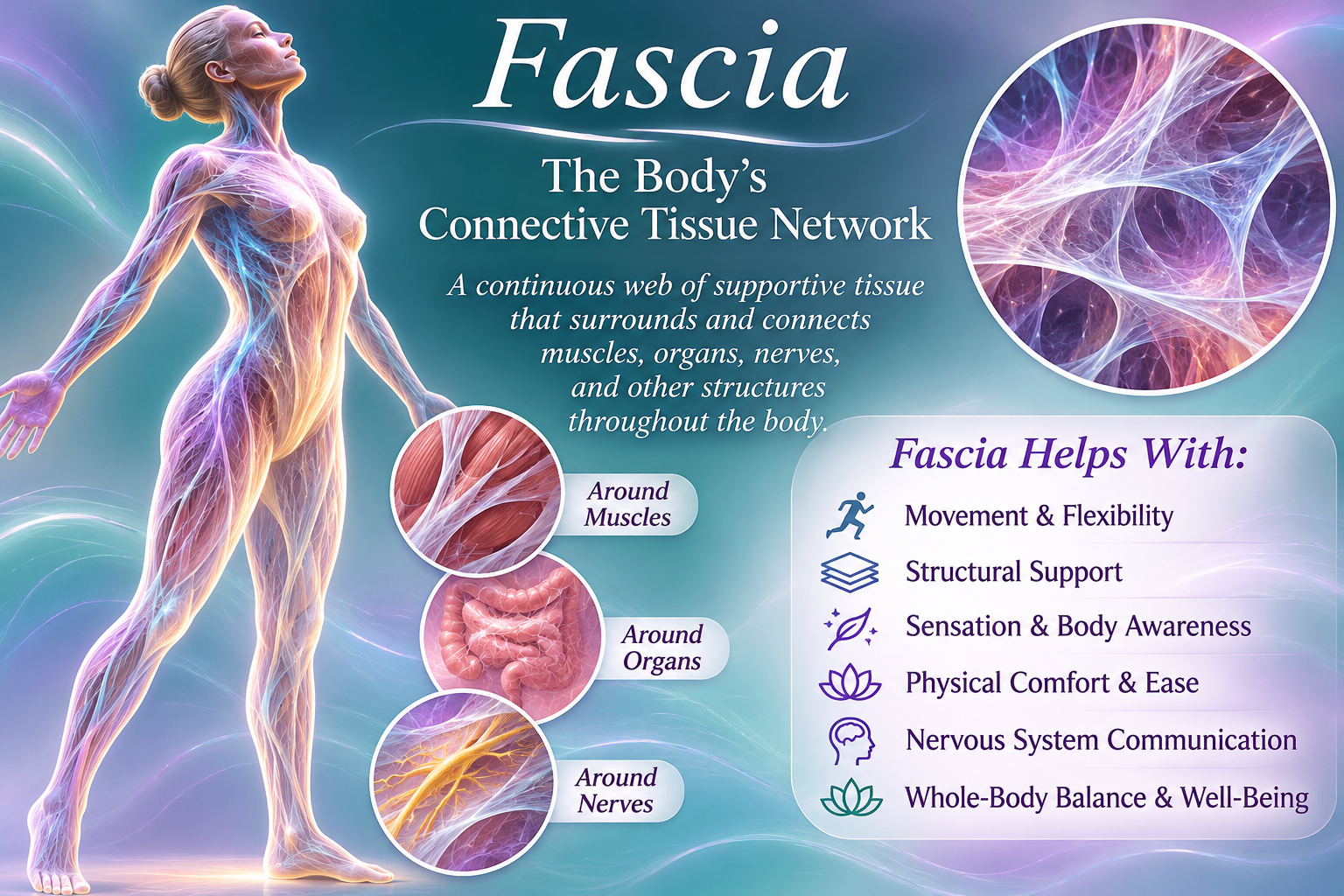
Understanding the connective tissue that connects your muscles, organs, movement, nervous system, and physical comfort.
When we think about our physical health, we usually focus on muscles, bones, joints, nerves, and organs. Yet another important part of the body often receives far less attention: fascia. Fascia is an extensive, interconnected network of connective tissue found throughout the body. It surrounds and supports muscles, organs, nerves, blood vessels, and other structures, helping them move and function together.
Far from being simply the body’s packaging material, fascia is living tissue that plays important roles in movement, stability, sensory awareness, and physical comfort.
Researchers are increasingly interested in how fascia interacts with the nervous system, responds to movement and mechanical stress, and may contribute to certain types of chronic pain.
Understanding fascia provides another perspective on why holistic wellness involves more than addressing individual muscles or isolated symptoms.
What Exactly Is Fascia?
Fascia is primarily composed of connective tissue containing collagen, elastin, water, and specialized cells.
It exists in several forms throughout the body, including:
- Superficial fascia: Connective tissue beneath the skin that helps support and organize underlying structures.
- Deep fascia: Denser connective tissue surrounding muscles, muscle groups, and other structures, helping transmit forces during movement.
- Visceral fascia: Connective tissue that surrounds and supports internal organs.
Although these tissues have different characteristics and functions, they work together as part of the body’s structural support system.
Healthy fascia must balance strength, flexibility, and the ability of adjacent tissues to glide smoothly against one another.
When connective tissues become irritated, injured, or less mobile, movement may feel restricted or uncomfortable.
Why Fascia Matters for Movement and Physical Comfort
Fascia helps coordinate movement by connecting and supporting different structures throughout the body.
For example, when you walk, bend, reach, or stretch, movement involves more than individual muscles contracting. Muscles, tendons, fascia, joints, and the nervous system work together to produce coordinated motion.
Fascia contributes to:
- Structural support: Helping maintain the organization of muscles and other tissues.
- Force transmission: Transferring mechanical forces between muscles and surrounding structures.
- Movement and flexibility: Allowing tissue layers to glide as the body moves.
- Proprioception: Contributing sensory information about body position and movement.
- Pain perception: Containing sensory nerve endings that can respond to mechanical and potentially painful stimuli.
This helps explain why discomfort in one area may sometimes involve several interconnected tissues rather than a single isolated muscle.
However, not every ache, restriction, or unexplained symptom is caused by fascia. Joint conditions, nerve irritation, inflammation, muscular problems, and other medical concerns may also contribute.
Fascia and the Nervous System: An Important Connection
One of the most interesting developments in fascia research is the growing understanding of its sensory functions.
Fascia contains nerve endings that help the body detect movement, pressure, and potentially harmful stimuli.
These signals are processed by the nervous system, which influences how we perceive tension, discomfort, and pain.
The relationship works in both directions.
When the nervous system perceives danger or prolonged stress, it may increase muscle tension and protective guarding. Over time, these responses can influence movement patterns and how the body experiences physical discomfort.
For example, during stressful periods, you might notice:
- Tightness across the shoulders or upper back
- Clenching of the jaw
- Shallow breathing or chest tension
- Increased neck discomfort
- Abdominal tension
- A general feeling of physical stiffness
These experiences involve complex interactions between muscles, connective tissues, breathing patterns, and nervous-system activity.
This is one reason why approaches that address both physical tension and nervous-system regulation may be useful in a comprehensive wellness program.
Can Emotional Stress Affect Fascia?
You may have heard the expression, “The body keeps the score.”
It reflects the observation that emotional experiences and prolonged stress can influence physical responses.
When we experience fear, anxiety, grief, or prolonged emotional strain, the nervous system can activate protective responses that affect breathing, posture, muscle tension, and pain sensitivity.
These responses are real and measurable.
What is less certain is the popular claim that specific emotions become physically stored within fascia.
Current research does not establish that fascia literally stores identifiable emotions such as grief, anger, or betrayal.
A more scientifically grounded explanation is that emotional experiences can influence the nervous system, muscle activity, movement habits, and perception of physical sensations.
This distinction is important because it allows us to recognize meaningful mind-body connections without overstating what science has demonstrated.
At Holistic Healing & Wellness, complementary approaches such as EFT Tapping, breathwork, somatic awareness, and relaxation techniques may be incorporated to help clients explore emotional stress and develop greater awareness of their physical responses.
Could Fascia Be Part of the Body’s Consciousness?
Some holistic practitioners, somatic therapists, and researchers exploring embodied cognition believe fascia may play a more significant role in our experience of body awareness and consciousness than previously recognized. Because fascia forms an interconnected network rich in sensory nerve endings, it continuously contributes information about movement, tension, pressure, and body position to the nervous system.
Some practitioners propose that this network may participate in what they describe as the body’s innate intelligence or body consciousness, the subtle awareness of physical sensations and internal states that exists beyond deliberate thought. Within certain holistic traditions, fascia is also viewed as a possible link between physical experiences, emotional patterns, and the body’s responses to stress.
What Can Affect Fascia Health?
Like other connective tissues, fascia responds to physical activity, injury, aging, and mechanical loading.
Several factors can influence its structure, function, and how comfortable movement feels.
1. Prolonged Inactivity
Extended periods of sitting or limited movement may contribute to stiffness, reduced mobility, and changes in how muscles and connective tissues function.
Gentle, regular movement helps maintain mobility and supports the normal mechanical activity of connective tissues.
2. Injury and Scar Tissue
Following injury or surgery, the body produces connective tissue as part of the repair process.
Scar formation is a normal and necessary part of healing, but in some cases it may contribute to altered tissue mobility or discomfort.
3. Repetitive Movement and Physical Overload
Repeated mechanical stress without adequate recovery may contribute to irritation or overuse problems involving muscles, tendons, and surrounding connective tissues.
4. Aging and Hormonal Changes
Connective tissues change throughout life. Aging affects collagen organization, tissue elasticity, and the body’s ability to recover from physical stress.
Hormonal changes, including those associated with menopause, may also influence musculoskeletal and connective tissue health.
5. Chronic Stress and Muscle Guarding
Persistent stress may contribute to prolonged muscular tension, altered movement patterns, and increased pain sensitivity.
Addressing stress regulation alongside appropriate movement and physical care may be beneficial.
Gentle Ways to Support Fascia and Connective Tissue Wellness
There is no single technique that can restore all fascia problems, and healthy connective tissue does not require aggressive manipulation.
However, several practical strategies may help support mobility, physical comfort, and overall musculoskeletal health.
Gentle Stretching and Mobility Exercises
Comfortable stretching, range-of-motion exercises, walking, and other regular movement can help maintain flexibility and mobility.
Consistency is generally more valuable than forceful stretching.
Individuals with joint hypermobility may benefit more from controlled strengthening and stabilization than from increasing flexibility.
Self-Massage and Fascia Tools
Foam rollers, massage balls, and handheld fascia tools may temporarily improve perceived stiffness, range of motion, or muscle soreness.
These techniques should be gentle and adapted to the individual’s condition.
More pressure does not necessarily produce better results. Aggressive manipulation can cause bruising or tissue irritation, particularly in people with fragile tissues, lipedema, or certain vascular conditions.
Strengthening and Functional Movement
Muscles and connective tissues adapt to appropriate mechanical loading.
Progressive strengthening, balance exercises, and functional movement can support mobility, stability, and physical resilience.
Warmth and Relaxation
Comfortable heat may temporarily ease muscular tension and improve the sensation of stiffness.
Warm baths, gentle heating methods, and appropriately supervised infrared sauna sessions may be enjoyable additions to a relaxation routine.
However, claims that heat permanently releases fascial adhesions or removes toxins from connective tissue have not been established.
Breathwork and Nervous-System Regulation
Slow, comfortable breathing and relaxation exercises may help reduce stress-related muscle guarding and improve awareness of physical tension.
These approaches can be especially helpful for people who notice that physical discomfort increases during periods of emotional stress.
Nutrition and Hydration
Fascia contains collagen and other components that require adequate nutrition for normal tissue maintenance and repair.
A balanced diet with sufficient protein, vitamin C, and other essential nutrients supports connective tissue health.
Normal hydration is important, although drinking extra water has not been shown to directly loosen tight fascia.
Fascia, Chronic Pain, and Whole-Body Wellness
Chronic pain is complex.
It may involve changes in muscles, joints, connective tissues, nerves, inflammation, and the way the nervous system processes sensory information.
In some circumstances, fascia may contribute to pain or restricted movement. However, chronic pain cannot always be explained by a structural abnormality.
This is why a personalized approach can be valuable.
For someone experiencing ongoing physical discomfort, appropriate wellness support may involve movement, nutritional guidance, stress-management strategies, relaxation, and collaboration with medical professionals when needed.
The goal is not simply to loosen tissue, but to support the many systems involved in comfortable movement and overall well-being.
Fascia, Lipedema, and Lymphatic Wellness
Fascia and connective tissue are also relevant when considering conditions such as lipedema and lymphedema.
Lipedema is a chronic disorder involving abnormal subcutaneous adipose tissue, often accompanied by tenderness, pain, easy bruising, and changes in limb size.
Lymphedema involves impaired lymphatic drainage and the accumulation of lymphatic fluid.
Although these conditions are different, they can coexist, and both may affect physical comfort, mobility, and tissue health.
Lezlie Cebulski has more than seven years of personal experience managing lipedema through non-surgical strategies and offers individualized wellness consultations involving compression guidance, nutritional support, gentle fascia techniques, movement, and complementary relaxation tools.
Fascia tools and self-massage should be approached cautiously in these conditions, and clients should follow appropriate medical and lymphedema-care guidance.
A Holistic Approach to Fascia and Mind-Body Wellness
At Holistic Healing & Wellness, fascia is considered within the larger context of physical comfort, stress regulation, nutrition, movement, and emotional well-being.
Rather than assuming that every symptom has one cause, Lezlie explores how multiple factors may influence the way you feel.
Depending on individual needs, supportive approaches may include:
- Nutritional and Lifestyle Consultation
- EFT Tapping for Emotional Wellness
- Gentle somatic awareness and breathwork
- Fascia tools for use and education
- Reflexology and Acupressure
- Personalized Aromatherapy
- Infrared Sauna with Color Therapy
- Infrared, Red Light & PEMF Crystal Mat Relaxation
- Education about appropriate self-massage, fascia tools, and gentle movement
These techniques serve different purposes, and scientific evidence varies. They are not all established treatments for fascia-related disorders.
Fascia Tools Available
At Holistic Healing & Wellness, Lezlie has a wide variety of fascia and soft-tissue massage tools available for demonstration and personalized guidance, including handheld fascia blasters, multi-pronged massage tools, wooden fascia rollers and body massage tools, foam rollers, trigger-point balls, gua sha and stainless steel soft-tissue instruments, and percussion massage devices. These tools offer different approaches to gentle self-massage, muscle relaxation, improved mobility, and temporary relief of stiffness or physical discomfort.
Lezlie also brings more than seven years of personal experience managing lipedema through non-surgical, non-invasive strategies. Through a combination of individualized self-care approaches, including appropriate fascia techniques, compression, nutritional support, red light therapy, and other complementary methods, she has experienced significant improvements in her own condition, which she describes as progressing from early Stage 3 to Stage 1 in appearance and symptoms.
This firsthand experience gives her a unique understanding of the challenges associated with lipedema, tissue sensitivity, swelling, and discomfort. She helps clients explore suitable tools and techniques, emphasizing gentle application, individual tolerance, and practical strategies they can continue at home. Individual outcomes vary, and these approaches are intended to complement appropriate medical care.
X-Inflamm and FLOW: Additional Tools for Fascia and Soft-Tissue Wellness
Holistic Healing & Wellness also offers X-Inflamm Massage Oil for pain and inflammation and FLOW Massage Oil for lymphatic support as additional options within a personalized approach to fascia care, soft-tissue comfort, and overall wellness.
The Connection to the Emotional Healing Tree™
Lezlie’s Emotional Healing Tree™ framework offers a practical way to consider the relationship between physical wellness and emotional health.
Replenish: Support connective tissue and overall physical wellness through adequate nutrition, hydration, movement, and restorative habits.
Regulate: Use breathing, relaxation, and nervous-system awareness to help manage stress-related tension and physical guarding.
Release: Explore emotional stress and gentle approaches to reducing muscular tension and improving comfort.
Reset & Repattern: Develop healthier movement habits, posture awareness, emotional responses, and self-care routines.
Reconnect & Renew: Build greater confidence in your body, reconnect with enjoyable activities, and support long-term well-being.
The objective is not to force the body into relaxation, but to create conditions that support comfort, resilience, and greater self-awareness.
Discover a Personalized Approach to Fascia and Holistic Wellness
Click to Enlarge and Read
If you experience recurring physical tension, chronic discomfort, stress-related muscle tightness, or want to learn more about supportive connective tissue wellness strategies, a personalized consultation may help you explore appropriate options.
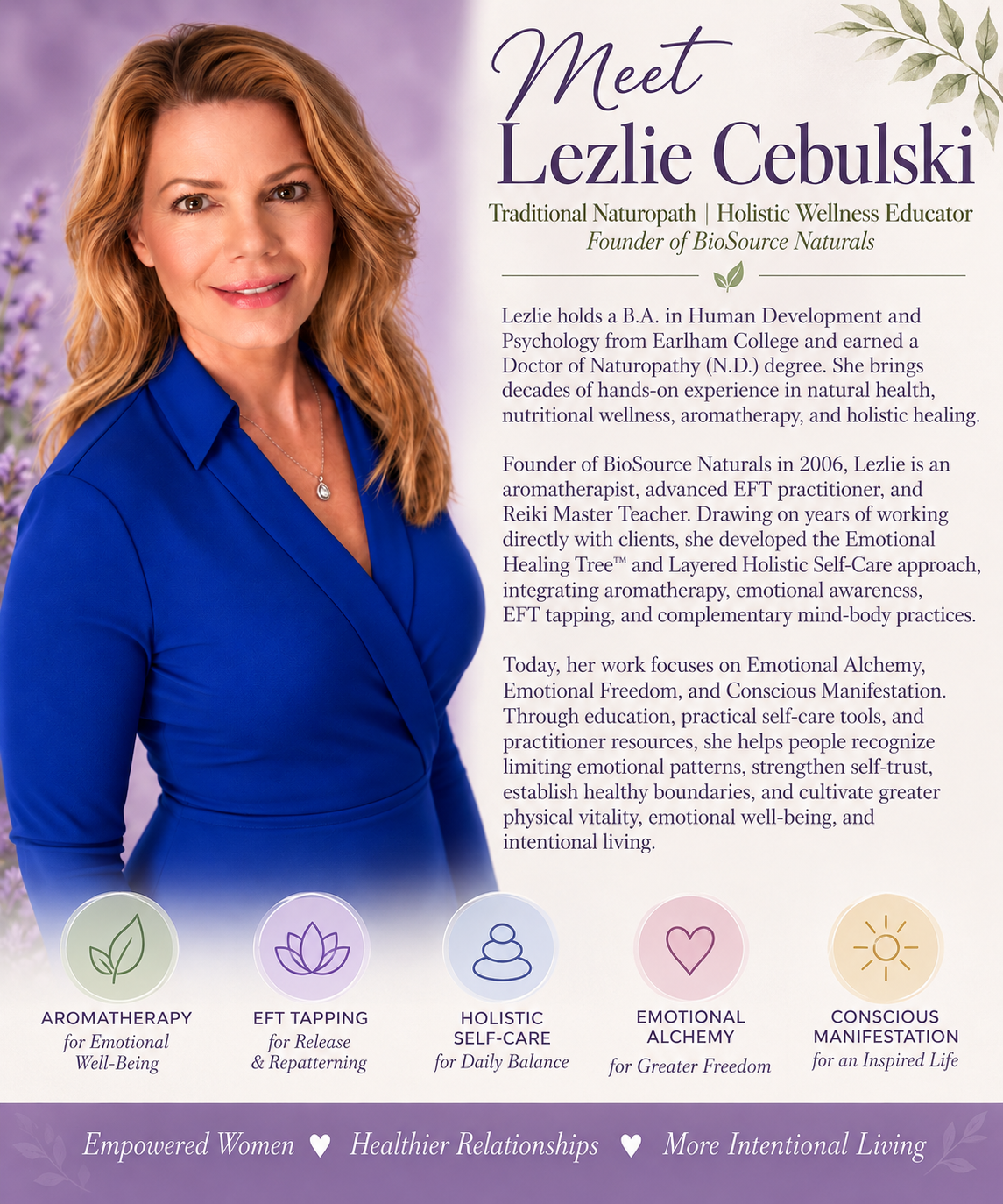
Lezlie Cebulski, N.D., EFT-ADV, Reiki Master Teacher, brings more than 35 years of involvement in health and wellness and over 15 years of private practice experience.
At Holistic Healing & Wellness, sessions can address physical wellness, emotional patterns, nervous-system regulation, and natural self-care within a whole-person approach.
Holistic Healing & Wellness
New Boston, Michigan — Serving Southeast Michigan
In-person and virtual consultations available.
Call 734-718-5228 or visit Sessions & Package Pricing to learn more.
Educational information only. Holistic wellness approaches are complementary and do not replace medical evaluation or treatment. Persistent or unexplained pain, swelling, weakness, or changes in sensation should be assessed by an appropriate healthcare professional.