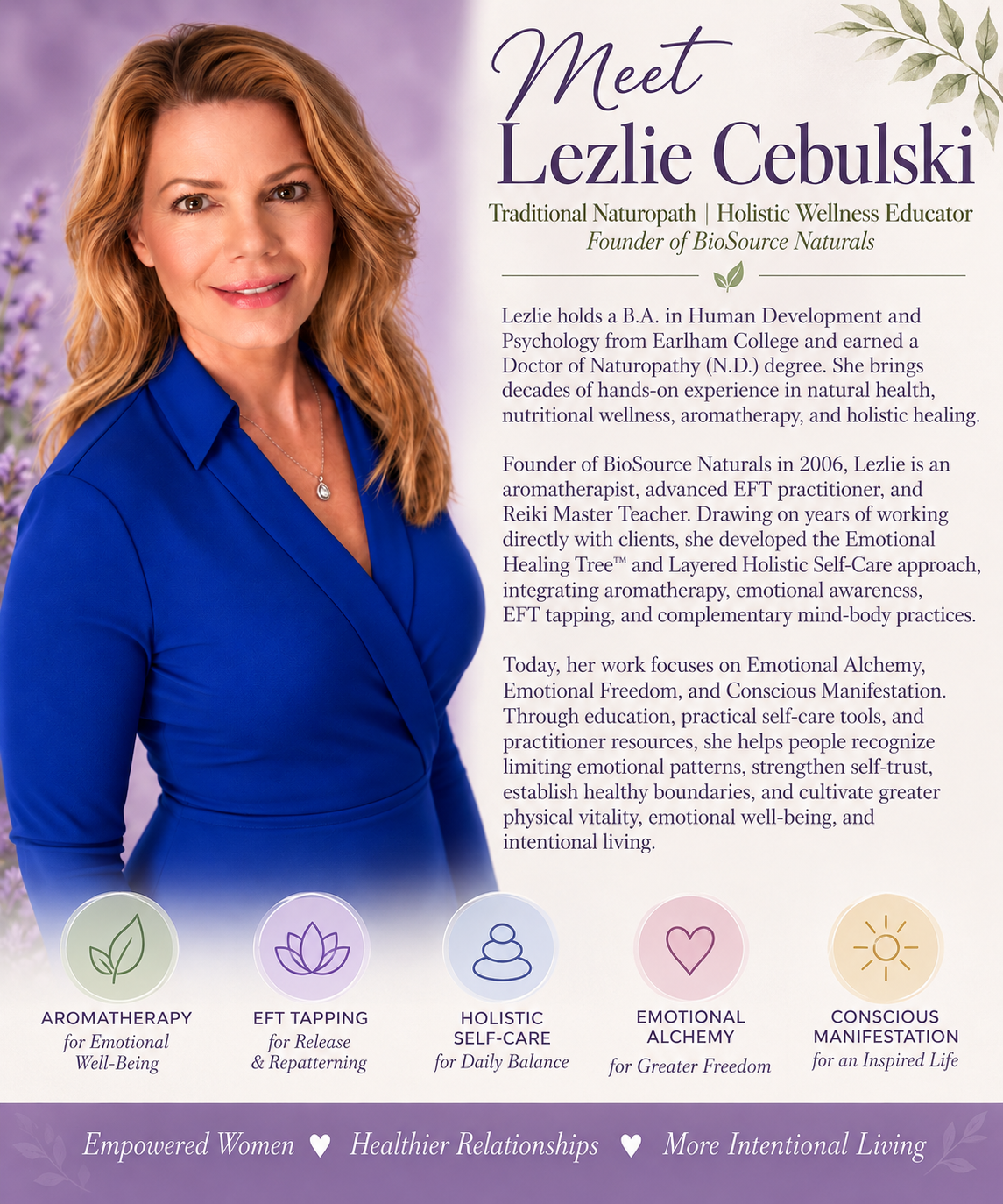
Hormonal changes can influence nearly every aspect of physical and emotional well-being, including energy, sleep, mood, metabolism, reproductive health, body composition, and sexual wellness. During perimenopause and menopause, women may experience hot flashes, night sweats, fatigue, insomnia, mood changes, brain fog, weight changes, and reduced libido. There are many approaches to supporting wellness during this transition, and every woman’s needs are different. Natural menopause support is available at Holistic Healing & Wellness in New Boston, Michigan, traditional naturopath Lezlie Cebulski, N.D. offers personalized consultations in office and remotely, focused on natural hormone support, nutritional supplements, herbal remedies, stress management, and complementary mind-body wellness.
With over 35 years of involvement in health and wellness and more than 15 years of private practice experience, Lezlie brings both professional knowledge and personal understanding to women’s hormonal wellness.
Having personally navigated perimenopause and menopause, she understands the challenges women may face when evaluating their options. Her extensive knowledge encompasses plant-based supplements, botanical remedies, nutritional strategies, bioidentical hormones, and current research on hormone replacement therapy (HRT).
This combination of professional experience, ongoing education, and firsthand understanding allows her to offer informed, compassionate guidance as women explore the options best suited to their individual needs and preferences.
How Lezlie Can Help You Explore Natural Hormone Support
Lezlie’s approach is based on the understanding that hormonal wellness involves more than estrogen and progesterone alone.
Nutrition, stress, sleep, thyroid function, digestive health, physical activity, and emotional well-being can all influence how a woman experiences hormonal transitions.
Rather than recommending the same products to everyone, Lezlie helps clients explore a variety of options that may complement their individual health needs and preferences.
Personalized Consultations May Include:
- Nutritional Supplement Guidance: Exploring vitamins, minerals, essential fatty acids, and other nutrients important to women’s health.
- Herbal & Plant-Based Support: Reviewing botanical preparations traditionally used during perimenopause and menopause.
- Supplement Samples & Formulation Comparisons: Exploring products available in Lezlie’s office and comparing ingredients, concentrations, and formulations.
- Optional Traditional Muscle Testing: Using available supplement samples as part of an exploratory complementary wellness practice.
- Stress & Nervous System Regulation: Incorporating EFT Tapping, aromatherapy, breathing techniques, and relaxation strategies.
- Sleep & Energy Support: Reviewing lifestyle habits and nutritional factors that may influence sleep quality and daytime energy.
- Digestive & Nutritional Wellness: Exploring digestive concerns, food choices, and factors that may influence nutrient intake and absorption.
- Hormone Therapy Education: Understanding bioidentical hormones, available prescription options, and current HRT research to support informed discussions with medical providers.
The goal is to help each woman better understand her options and develop a practical, personalized approach to hormonal wellness.
Natural Hormone Support: Vitamins, Minerals & Nutritional Supplements
Adequate nutrition is an important foundation for health throughout perimenopause, menopause, and beyond. Changes in dietary habits, stress, sleep, and physical activity may influence energy, mood, and overall well-being.
Lezlie provides education about a wide variety of nutritional supplements and their potential roles in supporting normal physiological function.
Nutrients Commonly Considered for Women’s Wellness
- Magnesium: Supports normal muscle and nerve function and may be useful when dietary intake is inadequate.
- Vitamin B6: Participates in neurotransmitter synthesis and normal metabolic processes.
- Vitamin B12: Supports neurological function and energy metabolism.
- Vitamin D3: Important for bone health, muscle function, and normal immune function.
- Calcium: Supports bone health, particularly during and after menopause.
- Zinc: Participates in numerous metabolic and reproductive processes.
- Selenium: Supports normal thyroid hormone metabolism.
- Iron: May be important for women experiencing heavy menstrual bleeding when deficiency is confirmed.
- Omega-3 Fatty Acids: Support cardiovascular health and have been studied for selected inflammatory and mood-related concerns.
These nutrients are not substitutes for hormone replacement therapy, and supplementing them does not necessarily increase estrogen or progesterone levels. Also different forms of vitamins and minerals are important to understand appropriately select for maximum benefit.
Identifying nutritional gaps and supporting adequate nutrient intake can be an important part of a comprehensive wellness program. Excessive supplementation can be harmful, particularly with nutrients such as selenium, iron, zinc, and vitamin B6.
Herbal & Plant-Based Supplements for Menopause and Perimenopause
Botanical preparations have a long history of traditional use in women’s wellness.
Some contain naturally occurring compounds that interact with hormone-related pathways, while others are primarily used for stress, sleep, or general well-being.
Lezlie offers education about a broad selection of herbs and plant-based supplements, including:
- Black Cohosh: Traditionally used for menopausal hot flashes, although clinical evidence is inconsistent.
- Red Clover: Contains plant isoflavones and has been studied for menopausal symptoms, with mixed results.
- Soy Isoflavones: Plant compounds that may provide modest relief from hot flashes for some women.
- Chaste Tree Berry (Vitex): Traditionally used for PMS and menstrual cycle-related symptoms, with some supportive evidence for selected PMS concerns.
- Evening Primrose Oil: Traditionally used for breast tenderness and premenstrual discomfort, although evidence is limited.
- Sage: Studied for menopausal sweating and hot flashes, but available research remains limited.
- Maca Root: Traditionally used for vitality and sexual well-being; evidence for hormonal symptom relief is limited.
- Ashwagandha: Studied for stress and sleep, but may affect thyroid function and interact with medications.
- Rhodiola: Traditionally used for fatigue and stress-related concerns, although evidence for menopausal symptoms is insufficient.
Choosing the Right Botanical Options
Not all herbal products are equivalent. Differences in plant species, extraction methods, standardization, concentrations, and combinations can affect product quality and suitability. Lezlie helps clients understand these differences and compare available formulations.
Some botanical supplements can interact with medications or may be unsuitable for individuals with thyroid disorders, liver disease, hormone-sensitive medical conditions, or other health concerns.
Natural does not automatically mean risk-free, and plant-based supplements should be selected with consideration for individual health circumstances.
Learn More About Nutritional Supplements, Herbs & Traditional Naturopathic Wellness
Personalized Supplement Consultations & Product Samples
One of the distinctive features of Holistic Healing & Wellness is Lezlie’s extensive familiarity with nutritional supplements, botanical preparations, and traditional naturopathic wellness strategies.
With over 35 years of involvement in the health and wellness field, she brings a broad understanding of the many products and approaches available to support women’s well-being.
Lezlie maintains a variety of nutritional supplements, herbal preparations, and product samples in her office, allowing clients to explore different formulations and learn about their potential roles in a personalized wellness program.
Depending on individual needs, consultations may include:
- Reviewing current supplements and medications.
- Discussing hormonal symptoms and wellness goals.
- Exploring vitamin and mineral intake.
- Comparing herbal and plant-based formulations.
- Reviewing ingredient combinations and product quality.
- Considering digestive health and nutrient absorption.
- Discussing stress, sleep, and lifestyle patterns.
- Identifying possible supplement interactions or precautions.
- Exploring traditional muscle testing with available samples.
- Developing a practical complementary wellness plan.
Lezlie’s approach emphasizes education, individualized guidance, and informed choices.
Muscle Testing & Traditional Naturopathic Assessment
Muscle Testing, also called applied kinesiology in some complementary wellness settings, is one of the traditional techniques Lezlie has incorporated into her practice for many years.
During in-office consultations, clients may have the opportunity to explore a selection of nutritional and botanical supplement samples through this traditional complementary method.
Lezlie uses muscle testing as an optional exploratory practice within her broader holistic approach.
Clients are encouraged to consider nutritional information, health history, professional medical advice, and personal preferences when making wellness decisions.
The Mind-Body Connection: Stress, Sleep & Hormonal Wellness
Hormonal changes and emotional stress often occur together.
Perimenopause and menopause may coincide with significant life transitions, including changing family responsibilities, caregiving, relationship changes, and career adjustments.
Stress can contribute to sleep disturbances, muscle tension, digestive discomfort, and emotional fatigue.
Cortisol, produced by the adrenal glands, is an important hormone involved in the body’s response to stress.
Although the term adrenal fatigue is frequently used in alternative wellness discussions, it is not a medically recognized diagnosis.
Nevertheless, chronic stress and inadequate recovery can have genuine effects on physical and emotional well-being.
Complementary Mind-Body Support
At Holistic Healing & Wellness, Lezlie may incorporate:
- EFT Tapping for emotional awareness and stress management.
- Aromatherapy for relaxation and sensory comfort.
- Gentle breathing and nervous system regulation.
- Mindfulness and somatic relaxation.
- Dietary & Lifestyle Strategies for sleep, nutrition, and physical activity.
- Lifepath & Personal Growth Counseling for navigating midlife changes.
These approaches may support overall well-being and the ability to cope with symptoms, although they do not necessarily correct hormonal deficiencies.
The Five-Part Holistic Approach to Hormonal Wellness
At Holistic Healing & Wellness, complementary strategies are organized around five interconnected principles.
Replenish — Nourish the Body
Explore vitamins, minerals, botanical supplements, hydration, balanced nutrition, and restorative sleep.
Release — Reduce Emotional Tension
Use EFT Tapping, journaling, aromatherapy, and emotional wellness practices to help manage stress and life transitions.
Regulate — Support Nervous System Balance
Practice breathing, mindfulness, relaxation, and gentle somatic techniques to encourage physical and emotional comfort.
Reset — Establish Healthier Daily Patterns
Explore dietary choices, physical activity, sleep routines, personal boundaries, and realistic self-care strategies.
Reconnect & Renew — Embrace Midlife Wellness
Reconnect with confidence, personal values, relationships, creativity, and a renewed sense of purpose during changing life stages.
Understanding Bioidentical Hormones & Hormone Replacement Therapy
In addition to natural wellness strategies, Lezlie offers education about conventional and bioidentical hormone replacement options.
Some women find that lifestyle changes and complementary wellness approaches meet their needs. Others experience symptoms that significantly affect their quality of life and may benefit from discussing prescription hormone therapy with their healthcare providers.
Lezlie recognizes that there is no single approach that is right for every woman.
Her knowledge of bioidentical hormones and current HRT research helps clients better understand their options and prepare informed questions for their prescribing healthcare professionals.
What Are Bioidentical Hormones?
Bioidentical hormones are manufactured hormones that have the same molecular structure as hormones naturally produced by the human body.
Examples include:
- Estradiol: An estrogen involved in reproductive function, bone health, and numerous physiological processes.
- Progesterone: A hormone involved in menstrual cycle regulation and reproductive health.
- Testosterone: A hormone involved in sexual function and other aspects of health in both men and women.
Bioidentical hormones are often manufactured using plant-derived starting materials, such as compounds obtained from soybeans or wild yams.
These plant compounds undergo chemical processing in a laboratory to produce hormones that are molecularly identical to human hormones.
Eating soybeans or wild yams does not cause the body to convert their plant compounds directly into prescription-strength estradiol or progesterone.
The term bioidentical describes a hormone’s molecular structure, not necessarily its safety, effectiveness, or manufacturing method.
What Is Bioidentical Hormone Replacement Therapy?
Bioidentical Hormone Replacement Therapy (BHRT) involves the use of hormones that are structurally identical to those produced naturally by the body.
Depending on individual medical needs, hormone therapy may be prescribed to help manage symptoms associated with menopause or certain diagnosed hormonal deficiencies.
Bioidentical hormone preparations may be available in several forms, including:
- Transdermal patches.
- Topical gels and creams.
- Oral capsules.
- Vaginal creams, tablets, and inserts.
- Other prescription formulations.
FDA-approved bioidentical hormone medications include estradiol and micronized progesterone.
These medications have undergone regulatory review for quality, safety, and effectiveness for their approved uses.
Bioidentical hormones are sometimes marketed as safer or more natural than other hormone therapies. However, bioidentical does not automatically mean safer.
FDA-approved bioidentical hormones are generally preferred over custom-compounded preparations when suitable approved products are available.
Hormone therapy should always be evaluated, prescribed, and monitored by an appropriately licensed medical professional.
What Current Research Tells Us About HRT
Modern research has helped clarify the benefits and risks of menopausal hormone therapy.
For appropriately selected women, particularly those younger than 60 or within approximately 10 years of menopause onset, systemic hormone therapy can be an effective option for managing bothersome hot flashes and night sweats.
Potential benefits may include:
- Significant relief from hot flashes and night sweats.
- Improvement in sleep when symptoms are disrupting rest.
- Prevention of bone loss and reduction in fracture risk during treatment.
- Relief of certain menopausal symptoms that interfere with quality of life.
Local vaginal estrogen therapy may be particularly helpful for vaginal dryness and other genitourinary symptoms of menopause, with different systemic exposure and risk considerations than systemic hormone therapy.
Research also suggests that the route of administration matters. Transdermal estrogen may carry a lower risk of blood clots than oral estrogen, although individual risk assessment remains essential.
For women with a uterus, systemic estrogen generally requires appropriate progestogen protection to reduce the risk of endometrial cancer.
HRT is not appropriate for everyone. A history of certain cancers, unexplained vaginal bleeding, blood clots, stroke, or other medical conditions may affect eligibility.
Lezlie helps clients understand the terminology, available formulations, and evolving research so they can have more informed conversations with their prescribing healthcare professionals.
Hormone Testing: Understanding Your Options
Hormone testing can be helpful in selected situations, but not every symptom requires extensive laboratory testing.
For women over age 45 with typical perimenopausal symptoms, hormone levels often fluctuate enough that a single blood or saliva test may not provide a reliable picture of menopausal status.
A licensed healthcare professional may recommend testing when symptoms suggest:
- Thyroid dysfunction.
- Iron deficiency or anemia.
- Premature ovarian insufficiency.
- Specific endocrine disorders.
- Other medical conditions requiring evaluation.
Schedule a Personalized Hormonal Wellness Consultation
Lezlie Cebulski, N.D., is a traditional naturopath, aromatherapist, EFT practitioner, Reiki Master Teacher, and holistic wellness consultant with over 35 years of involvement in health and wellness and more than 15 years of private practice experience.
Having personally navigated perimenopause and menopause, she understands the importance of having access to clear information about both conventional hormone therapy and natural wellness options.
Her professional background includes a Doctor of Naturopathy, a bachelor’s degree in Human Development and Psychology, extensive experience with nutritional supplements and botanical preparations, and a longstanding commitment to complementary mind-body wellness.
At Holistic Healing & Wellness, Lezlie offers personalized consultations for individuals interested in:
- Exploring vitamins, minerals, and nutritional supplements.
- Learning about herbal and plant-based options for hormonal wellness.
- Reviewing supplement formulations and available samples.
- Optional traditional muscle testing.
- Stress management and nervous system regulation.
- Nutritional and digestive wellness.
- Complementary support during perimenopause and menopause.
- Understanding bioidentical hormone replacement options.
- Lifestyle strategies that may complement medically prescribed hormone therapy.
Appointments are available in New Boston, Michigan, and through virtual consultations.
Contact Holistic Healing & Wellness to learn more about individualized hormonal wellness education and complementary support.
Important Medical & Professional Disclaimer
Lezlie Cebulski is a traditional naturopath and holistic wellness practitioner. She is not a licensed physician, endocrinologist, or hormone-prescribing clinician.
Services are educational and complementary in nature and do not constitute medical diagnosis, hormone prescribing, or treatment of endocrine disorders.
Bioidentical hormone therapy and other prescription hormonal treatments should be prescribed and monitored by appropriately licensed healthcare professionals.
Nutritional supplements, herbal preparations, and complementary assessment methods should not replace appropriate medical care.
These statements have not been evaluated by the Food and Drug Administration. Products discussed are not intended to diagnose, treat, cure, or prevent any disease.