Navigating Loss, Rebuilding Emotional Balance & Rediscovering Yourself
Grief is not limited to the death of someone we love.
We may grieve the end of a marriage, the betrayal of someone we trusted, the loss of a meaningful relationship, a career ending, or the realization that an important chapter of our lives has come to a close.
Sometimes the most difficult losses involve not only what happened, but also the future we imagined, the trust we placed in another person, or the part of ourselves we invested in a relationship.
At Holistic Healing & Wellness in New Boston, Michigan, Lezlie Cebulski offers compassionate, personalized mind-body wellness support for individuals navigating grief, betrayal, divorce, emotional stress, and major life transitions.
Her approach combines traditional naturopathic wellness education, Emotional Freedom Techniques (EFT Tapping), nervous system regulation, aromatherapy, and personal growth strategies to support physical and emotional well-being.
Healing does not mean forgetting what happened. It means finding ways to carry your experiences without allowing them to define the rest of your life.
Understanding Grief: More Than the Loss of a Loved One
Grief is a natural response to losing someone or something meaningful.
It can involve sadness, anger, guilt, anxiety, confusion, loneliness, exhaustion, and sometimes even relief.
Grief may arise from:
- Death & Bereavement: Losing a spouse, parent, child, friend, family member, or beloved pet.
- Divorce & Relationship Endings: Mourning the loss of companionship, shared dreams, family traditions, and an imagined future.
- Betrayal & Broken Trust: Experiencing dishonesty, abandonment, infidelity, rejection, or a profound violation of trust.
- Career Loss & Identity Changes: Leaving a long-term career, losing professional relationships, or experiencing a painful ending to an important chapter of life.
- Family Estrangement: Grieving relationships that remain unresolved or emotionally distant.
- Health & Life Transitions: Adjusting to illness, caregiving responsibilities, retirement, aging, or changes in independence.
- Ambiguous Loss: Grieving someone who is physically present but emotionally unavailable, or a relationship that ended without clear resolution.
Not all grief follows a predictable sequence.
Some people experience intense emotions immediately. Others feel numb, distracted, or surprisingly functional before their feelings become more apparent.
There is no universal timeline for grief.
Betrayal Trauma: When Trust Is Broken
Betrayal can be especially painful because it involves more than the loss of a relationship.
It can challenge our understanding of what happened, whom we can trust, and even how we view ourselves.
Betrayal may occur in marriages, friendships, families, professional relationships, or other situations where trust and emotional investment were significant.
Common responses include:
- Replaying conversations and events.
- Questioning your judgment or intuition.
- Anger, disappointment, or disbelief.
- Feeling rejected, dismissed, or unappreciated.
- Difficulty trusting others.
- Emotional exhaustion and heightened stress.
- Struggling with the absence of an apology or meaningful closure.
- Feeling conflicted about whether to reconnect or walk away.
For some individuals, betrayal produces trauma-related symptoms that warrant professional assessment. Not every experience of betrayal, however, constitutes a clinical trauma disorder.
Healing Does Not Always Require Forgiveness or Reconciliation
One of the most important aspects of emotional recovery is recognizing that you do not have to restore a relationship in order to restore your own well-being.
Sometimes reconciliation is possible and desirable.
Other times, establishing boundaries, reducing contact, or ending a relationship is the healthiest choice.
You may never receive the explanation, acknowledgment, or apology you hoped for.
Emotional healing can involve learning to accept that uncertainty while reclaiming your own sense of peace, dignity, and personal direction.
The goal is not to excuse harmful behavior or force forgiveness.
It is to develop a healthier relationship with your experience and move forward in a way that honors your needs and values.
Divorce & Relationship Loss: Grieving the Life You Expected
Divorce and relationship endings can involve multiple losses at once.
Beyond the relationship itself, individuals may grieve:
- Shared dreams and future plans.
- Family routines and traditions.
- Financial stability or a familiar home.
- Social connections.
- A sense of identity as a partner.
- Trust, intimacy, and emotional security.
- The belief that the relationship would last.
Even when ending a relationship is necessary or ultimately beneficial, grief may still be present.
Conflicting emotions are normal. Relief and sadness, freedom and loneliness, or anger and affection can coexist.
Holistic emotional wellness support can provide opportunities to explore these experiences, establish new routines, and reconnect with personal interests and goals.
How Grief & Emotional Stress Affect Physical Health
Grief and prolonged emotional stress can influence the body as well as the mind.
The nervous system, endocrine system, immune system, and digestive system are interconnected through complex physiological pathways.
During periods of significant stress, individuals may experience:
- Difficulty falling asleep or staying asleep.
- Fatigue and reduced energy.
- Changes in appetite or eating habits.
- Muscle tension and headaches.
- Digestive discomfort.
- Difficulty concentrating.
- Increased sensitivity to everyday stress.
- Changes in motivation and physical activity.
- Heightened anxiety or emotional reactivity.
These experiences do not mean that grief is causing permanent physical damage. However, prolonged stress can affect daily functioning and make self-care more difficult.
Supporting nutrition, sleep, relaxation, and nervous system regulation may help individuals care for their physical well-being during emotionally demanding periods.
Persistent or severe physical symptoms should also be evaluated by an appropriate healthcare professional.
Emotional Healing & the Nervous System
When we experience a significant loss or betrayal, our minds may continue returning to the event in an attempt to understand what happened.
This can involve repetitive thinking, emotional triggers, or heightened awareness of situations that resemble the original experience.
The autonomic nervous system plays a role in the body’s stress response.
Learning to recognize signs of overwhelm and practicing calming techniques may help individuals respond more effectively to difficult emotions.
Complementary practices such as EFT Tapping, breathing exercises, mindfulness, and aromatherapy may provide opportunities for relaxation and emotional self-awareness.
The objective is not to suppress grief or force positive thinking. It is to create enough emotional stability to experience difficult feelings without becoming continually overwhelmed by them.
The Emotional Healing Tree™: A Framework for Emotional Alchemy
Emotional healing rarely happens in one dramatic moment.
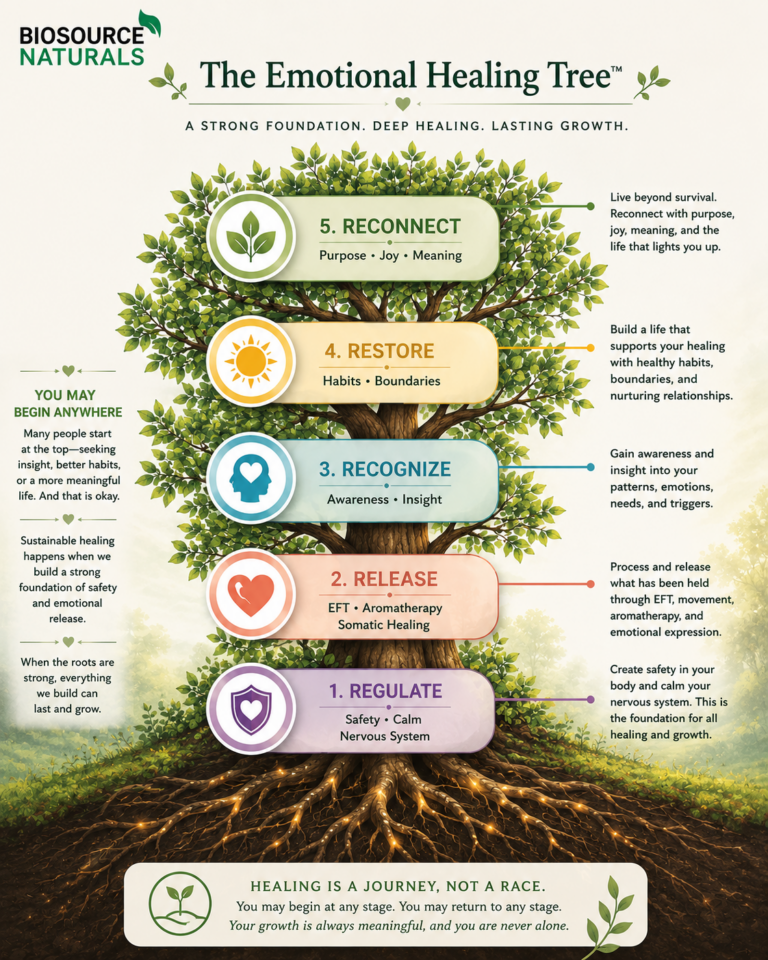
Lezlie Cebulski’s Emotional Healing Tree™, developed for BioSource Naturals, offers a framework for understanding emotional growth through five interconnected stages.
1. REGULATE — Safety, Calm & Nervous System Balance
When emotions feel overwhelming, developing a greater sense of calm may be the first priority.
Gentle breathing, grounding, relaxation, and other supportive practices can help create space for emotional reflection.
2. RELEASE — Acknowledging & Processing Emotions
Grief, anger, disappointment, and fear deserve acknowledgment rather than judgment.
EFT Tapping, journaling, aromatherapy, and other complementary techniques may support emotional expression and relaxation.
Release does not mean erasing memories or eliminating every difficult feeling.
3. RECOGNIZE — Awareness, Understanding & Insight
With greater emotional awareness, we may begin recognizing recurring patterns and beliefs.
Questions might include:
- Why did this experience affect me so deeply?
- What did this relationship represent in my life?
- What expectations or beliefs were challenged?
- Am I carrying responsibilities that were never mine?
- What do I need to understand about myself moving forward?
4. RESTORE — Boundaries, Habits & Personal Empowerment
Insight can lead to meaningful changes.
We may establish healthier boundaries, change patterns of over-responsibility, communicate differently, or choose to disengage from situations that no longer support our well-being.
5. RECONNECT — Purpose, Joy & Meaning
Healing involves more than reducing emotional distress.
It also means reconnecting with curiosity, creativity, meaningful relationships, personal interests, and a renewed sense of purpose.
The past does not disappear.
Our relationship to it can change.
Explore Emotional Healing with Essential Oils and the Emotional Healing Tree™.
Layered Holistic Care for Grief, Betrayal & Emotional Stress
Lezlie’s holistic approach combines six foundations of personalized self-care.
REPLENISH — Support the Physical Body
Emotional stress can disrupt nutrition, sleep, energy, and everyday routines.
Sessions may include education about:
- Nutritional Supplements, Herbs & Traditional Naturopathic Wellness
- Balanced nutrition and adequate hydration.
- Nutritional considerations during prolonged stress.
- Supporting restorative sleep and daily energy.
- Gentle movement and physical self-care.
Certain nutritional deficiencies or medical conditions may contribute to fatigue or mood-related symptoms and should be assessed by a qualified healthcare provider.
RELEASE — Explore Difficult Emotions
Grief, betrayal, guilt, rejection, anger, and disappointment can influence emotional well-being long after an event has occurred.
Complementary practices may include:
- Emotional Freedom Techniques (EFT Tapping)
- The Emotion Code
- Guided emotional awareness.
- Journaling and self-reflection.
- Personalized Aromatherapy for relaxation and comforting self-care rituals.
These techniques may support emotional awareness and relaxation but are not substitutes for evidence-based trauma treatment or psychotherapy.
REGULATE — Calm the Nervous System
Developing a greater sense of emotional stability can be especially helpful during periods of grief and uncertainty.
Sessions may incorporate:
- EFT Tapping for stress management.
- Breathing and grounding exercises.
- Mindfulness.
- Gentle body-awareness practices.
- Energy Medicine Exercises
- Relaxation-focused sensory experiences.
RESET — Restore Balance & Daily Routines
Loss and emotional upheaval can disrupt even familiar daily habits.
Restoring supportive routines may involve sleep, nutrition, movement, relaxation, and meaningful activities.
Optional complementary practices include:
These products and practices may be used as personal relaxation rituals. They have not been established as treatments for grief-related mental health conditions.
REPATTERN — Develop Healthier Emotional Responses
Difficult experiences can influence beliefs about self-worth, responsibility, trust, and relationships.
Through self-reflection and supportive wellness practices, clients may explore:
- Patterns of overgiving or excessive responsibility.
- Self-blame and persistent guilt.
- Difficulty establishing boundaries.
- Fear of rejection or abandonment.
- Repetitive thinking about painful events.
- Rebuilding confidence and self-trust.
The objective is to develop greater emotional flexibility and healthier responses to future challenges.
RECONNECT & RENEW — Rediscover Your Sense of Self
Grief and betrayal can sometimes leave individuals wondering who they are without a particular person, relationship, or role.
Life Path Counseling & Personal Growth provides opportunities to explore personal values, changing priorities, boundaries, relationships, and future possibilities.
Spiritual exploration may be incorporated when meaningful to the client, without requiring any particular religious belief.
Healing can mean creating a life that reflects who you are now—not simply trying to return to who you were before the loss.
What Results Can You Expect?
Every person’s experience of grief, betrayal, and emotional recovery is different.
There is no fixed timeline for healing, and the goal is not to rush or eliminate normal grief.
In Lezlie’s experience, many clients report feeling more relaxed, emotionally supported, and better equipped to manage stress within the first two to three sessions.
Some clients also describe greater clarity, improved self-awareness, and a renewed sense of personal direction.
These observations reflect individual experiences rather than guaranteed outcomes or evidence that complementary techniques treat trauma-related mental health conditions.
Individuals experiencing persistent depression, severe anxiety, post-traumatic stress symptoms, or significant difficulty functioning should seek evaluation from a qualified mental health professional.
Client Testimonials: Grief, Betrayal & Emotional Healing
“When I first saw Lezlie, I thought I was doing ok in life on the outside, but inside I was really a mess. After a few sessions, I now experience peace and joy like I never dreamed possible! My relationships with people have changed. People see that I am different and treat me differently. I thank God for Lezlie.”
— J. Jacks
“I really feel great about your program; it saved my life! I wish I had met you years ago. I feel so much better and have released guilt I have felt for years. I really believe God sent you to me.”
— Margaret L., age 91
These testimonials reflect individual experiences and personal beliefs. Results vary. Complementary wellness practices are not substitutes for medical or mental health treatment.
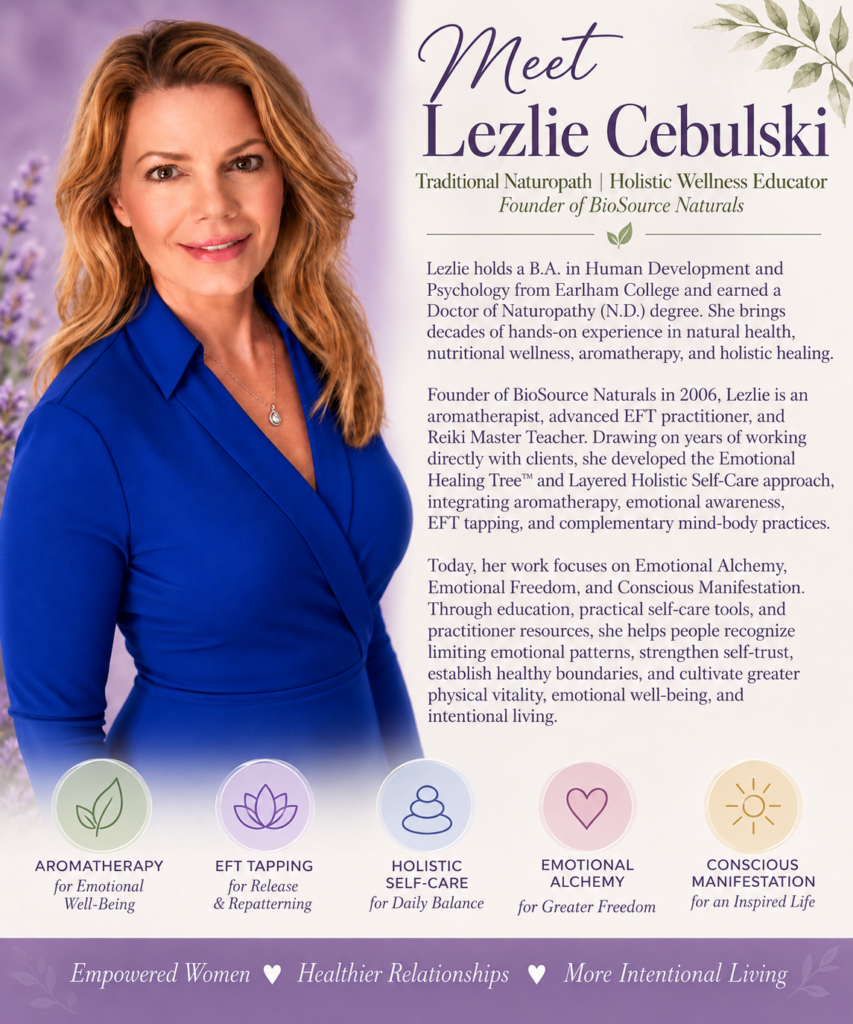
Meet Lezlie Cebulski
Lezlie Cebulski is an ND, traditional naturopath, advanced EFT practitioner, aromatherapist, Reiki Master Teacher, and holistic wellness educator with a Bachelor of Arts in Human Development and Psychology.
With more than 35 years of experience in holistic wellness and over 15 years in private practice, she brings a compassionate, personalized approach to emotional and physical well-being.
Her work emphasizes attentive listening, emotional self-awareness, nervous system regulation, nutritional wellness, and practical strategies for navigating difficult life transitions.
Lezlie understands that emotional recovery is deeply individual. Some clients seek help processing grief, while others are navigating betrayal, divorce, burnout, loss of identity, or significant changes in their relationships and responsibilities.
Her goal is to help clients explore supportive self-care practices, strengthen personal boundaries, and reconnect with their own sense of purpose and well-being.
Schedule a Personalized Holistic Emotional Wellness Session
If you’re navigating grief, betrayal, divorce, or a difficult life transition, you don’t have to figure out every step of your next chapter at once. Personalized sessions provide a compassionate, nonjudgmental environment to explore emotional wellness, nervous system regulation, and supportive self-care strategies.
In-person appointments are available in New Boston, Michigan, serving Downriver and Southeast Michigan, with virtual wellness consultations available for selected services.
Call 734-718-5228 to schedule your FREE 15-minute holistic health consultation.
Appointments are available in person in New Boston, Michigan, or virtually by Zoom or phone.
View Session Rates & Schedule an Appointment
Important Professional Disclaimer
Lezlie Cebulski practices as a traditional naturopath and holistic wellness educator. She is not a licensed physician, psychologist, psychotherapist, or licensed mental health counselor.
Services are intended for complementary wellness education, relaxation, and personal development. They do not diagnose or treat post-traumatic stress disorder, depression, anxiety disorders, prolonged grief disorder, or other medical or psychiatric conditions.
Individuals experiencing persistent or severe emotional distress, trauma-related symptoms, or difficulty functioning should seek evaluation from a qualified healthcare or mental health professional.
If you are experiencing thoughts of suicide or self-harm, seek immediate professional support. In the United States, call or text 988 for the Suicide & Crisis Lifeline.