
Gut Health and Anxiety: Supplements, Aromatherapy & the Gut–Brain Connection
Our Blog
Gut Health and Anxiety: Supplements, Aromatherapy & the Gut–Brain Connection
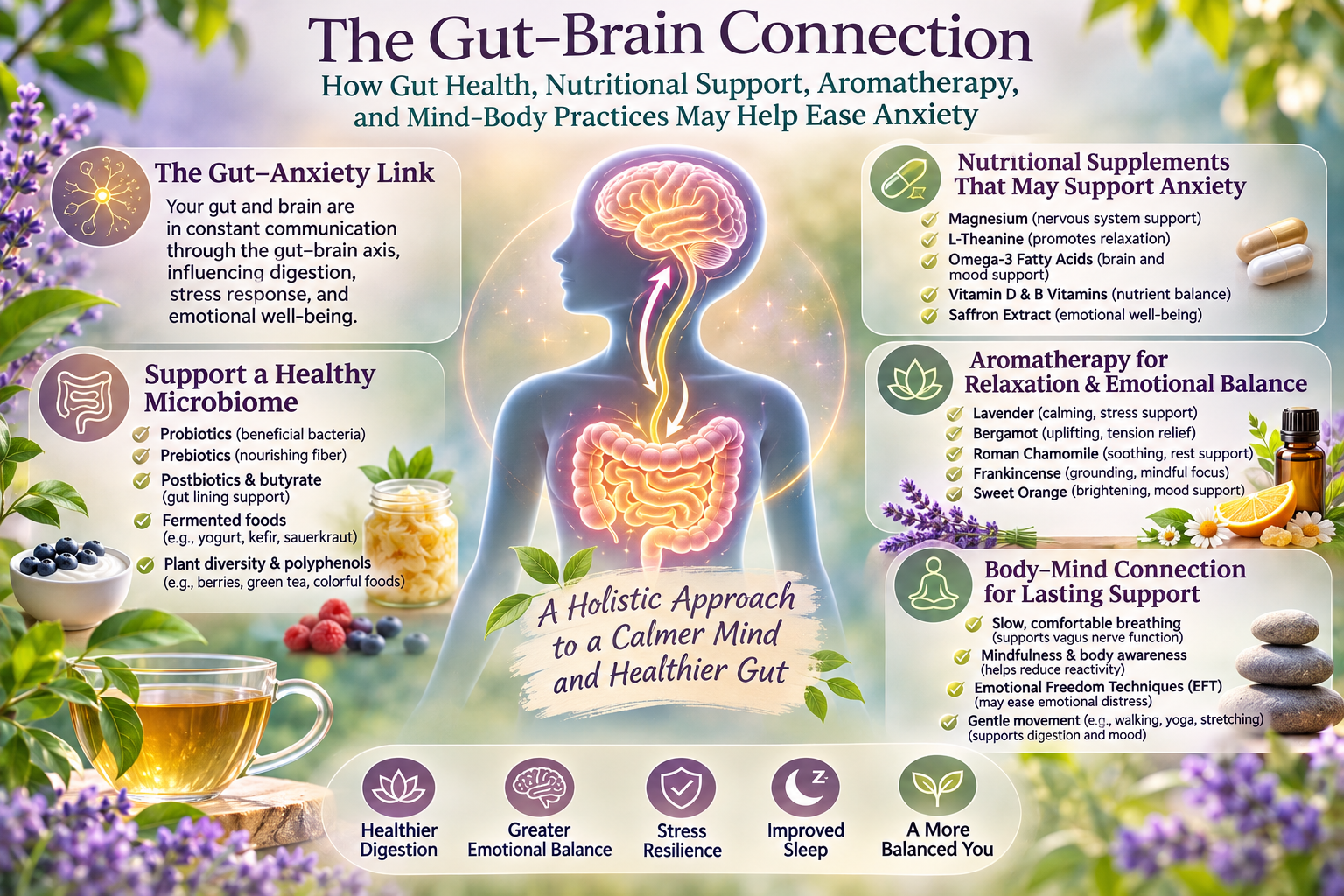
Understanding Gut Health and Anxiety – The Relationship Between Your Digestive System, Nervous System, Emotions, and Overall Well-Being
Have you ever experienced butterflies in your stomach before an important event? Lost your appetite during a stressful period? Or noticed that digestive discomfort seems to accompany feelings of anxiety? These experiences are not coincidental. Your digestive system and brain are constantly communicating through an intricate network of nerves, hormones, immune signals, and chemical messengers. This is a common experience of the relationship between gut health and anxiety that many of us can relate to.
This relationship is known as the gut–brain axis, and emerging research suggests that the microorganisms living in our digestive tract may play an important role in emotional well-being.
For those seeking a holistic approach to anxiety, understanding this connection opens the door to several complementary strategies: nourishing the gut microbiome, supporting the nervous system, exploring appropriate nutritional supplements, and using aromatherapy and mind–body practices to encourage relaxation.
Rather than viewing anxiety as something that exists only in the mind, we can begin to understand it as an experience involving the entire body.
1. Understanding the Gut–Brain Axis & Gut Health and Anxiety
Your gastrointestinal tract contains an extensive network of neurons called the enteric nervous system, sometimes referred to as the body’s second brain.
Although this nervous system does not think or reason like the brain, it coordinates digestion and communicates continuously with the central nervous system.
This communication occurs through several pathways:
- The Vagus nerve: A major communication pathway connecting the brain with the digestive organs, helping coordinate digestion and autonomic nervous system responses.
- Neurotransmitters: Chemical messengers, including serotonin and GABA, participate in both gastrointestinal function and nervous system regulation.
- The immune system: Immune activity and inflammatory signaling can influence both physical sensations and emotional well-being.
- The gut microbiome: Trillions of microorganisms help metabolize nutrients, produce biologically active compounds, and interact with immune and nervous system pathways.
- The stress response: Cortisol and other stress-related hormones can influence gastrointestinal motility, intestinal permeability, and microbial communities.
An important distinction is that although much of the body’s serotonin is produced in the gastrointestinal tract, this serotonin does not directly cross into the brain. Its role in gut function is different from the serotonin signaling involved in mood regulation.
Nevertheless, the digestive system and brain are deeply interconnected which is why gut health and anxiety are connected.
2. How Gut Health May Influence Anxiety
The gut microbiome is an ecosystem composed of bacteria, fungi, viruses, and other microorganisms. Many of these organisms contribute to healthy digestion, nutrient metabolism, immune function, and the maintenance of the intestinal barrier.
When the balance or function of this ecosystem changes, it is sometimes described as dysbiosis.
Research has identified associations between certain microbiome patterns and anxiety symptoms. However, scientists are still determining which changes contribute to anxiety, which result from stress, and which are influenced by other factors.
Several mechanisms are being investigated.
Inflammatory signaling: Changes in intestinal microbial activity may influence immune signaling, which can interact with the nervous system.
Microbial metabolites: Beneficial bacteria ferment dietary fibers into short-chain fatty acids, including butyrate, which help maintain intestinal health and may influence gut–brain communication.
Stress responsiveness: Chronic stress can alter digestion, gut motility, and the intestinal environment. In turn, gastrointestinal discomfort may intensify feelings of anxiety.
Nutritional status: Digestive disorders, restrictive diets, or malabsorption can sometimes contribute to nutrient deficiencies that affect energy, neurological function, and emotional well-being.
The important takeaway is that gut health may be one contributing factor in anxiety, but it is rarely the only factor.
Anxiety can also involve genetics, trauma, sleep, hormonal changes, medications, medical conditions, and ongoing life circumstances.
3. The Stress–Digestion–Anxiety Cycle
One of the most interesting aspects of the gut–brain connection is that communication travels in both directions.
When we experience prolonged stress, the body may shift toward a sympathetic nervous system response commonly associated with fight-or-flight.
During this response, digestion may become less comfortable or less predictable.
Some individuals experience nausea, abdominal tension, diarrhea, constipation, bloating, or changes in appetite.
These sensations can then become additional sources of worry.
For example:
Emotional stress → digestive disruption → uncomfortable physical sensations → increased anxiety → further stress.
Over time, this pattern may become self-reinforcing.
This is why holistic anxiety support should not focus exclusively on either the digestive system or the mind.
Supporting both may help interrupt the cycle.
4. Nutritional Supplements That May Support Anxiety
Certain nutrients and botanical preparations have been studied for their potential effects on stress, sleep, and anxiety symptoms.
Evidence varies considerably, and supplements should not be viewed as substitutes for appropriate medical or mental health treatment.
Magnesium
Magnesium participates in hundreds of biochemical reactions, including those involved in nerve signaling, muscle function, and normal nervous system activity.
Some preliminary research suggests magnesium supplementation may benefit certain individuals experiencing anxiety or stress, particularly when magnesium intake is inadequate. However, clinical evidence remains limited.
Magnesium glycinate is commonly chosen because it is generally well tolerated, while magnesium citrate may also influence bowel movements.
People with kidney disease should not supplement magnesium without medical guidance. Supplemental magnesium can also interfere with the absorption of certain medications.
L-Theanine
L-theanine is an amino acid naturally present in tea.
Small clinical studies suggest that it may help some individuals experience greater relaxation or reduced stress responses without the same degree of sedation associated with some calming medications.
However, evidence for treating diagnosed anxiety disorders remains insufficient.
Omega-3 Fatty Acids
Omega-3 fatty acids, particularly EPA and DHA, support normal cell membrane function and participate in processes involved in inflammatory regulation.
Research examining omega-3 supplementation and anxiety has produced mixed findings, although some studies suggest potential benefits.
Fatty fish, walnuts, chia seeds, and flaxseed can also contribute to a nutrient-rich dietary pattern, although plant sources primarily provide ALA rather than EPA or DHA.
Vitamin D and B Vitamins
Vitamin D, vitamin B12, folate, and other B vitamins contribute to normal neurological and metabolic function.
Deficiencies may contribute to symptoms that overlap with anxiety, such as fatigue, poor concentration, or changes in mood.
Supplementation is most appropriate when dietary intake is inadequate or a deficiency is identified.
More is not necessarily better. High doses of certain vitamins, including vitamin B6, can cause adverse effects.
Saffron Extract
Saffron has attracted research interest for its potential effects on mood and anxiety.
Some small randomized trials and reviews have reported promising results, but larger, higher-quality studies are needed to establish its effectiveness and long-term safety.
Concentrated saffron supplements may interact with medications and are not appropriate for everyone, particularly during pregnancy without medical guidance.
A thoughtful approach: Rather than combining numerous supplements at once, consider nutritional adequacy, individual health conditions, medication interactions, and the specific symptoms you hope to address.
5. Supporting and Restoring a Healthy Gut Microbiome
A healthy microbiome is not defined by the presence of one perfect bacterial species or a single ideal ratio of microorganisms. Microbial communities vary considerably from person to person.
The goal is to support a resilient digestive ecosystem through consistent habits rather than attempting to eliminate every potentially undesirable microorganism.
Probiotics: Introducing Beneficial Microorganisms
Probiotics are live microorganisms that may provide health benefits when consumed in adequate amounts. Commonly studied organisms include species of Lactobacillus and Bifidobacterium. Certain strains have been investigated for their potential effects on stress and anxiety and are sometimes described as psychobiotics.
For example, research has explored specific preparations containing Lactobacillus helveticus, Bifidobacterium longum, and other strains.
However, results are inconsistent, and benefits observed with one strain cannot automatically be applied to another. A probiotic that supports digestive comfort does not necessarily improve anxiety.
People who are severely immunocompromised or critically ill should seek medical guidance before taking live microbial supplements.
Prebiotics: Feeding Beneficial Gut Bacteria
Prebiotics are substances selectively utilized by microorganisms in ways that confer health benefits.
Common supplemental prebiotics include:
- Inulin
- Fructooligosaccharides (FOS)
- Galactooligosaccharides (GOS)
Prebiotic fibers can also be found naturally in foods such as onions, garlic, asparagus, oats, legumes, and certain fruits.
These fibers help support microbial fermentation and the production of beneficial metabolites.
However, introducing large quantities too quickly may cause gas or bloating, particularly in people with irritable bowel syndrome or sensitive digestion.
Postbiotics and Butyrate
Postbiotics are preparations of inanimate microorganisms and/or their components that confer a health benefit.
Butyrate, a short-chain fatty acid produced when certain intestinal bacteria ferment dietary fiber, is often discussed alongside postbiotics, although isolated butyrate does not automatically meet the formal definition of a postbiotic.
Butyrate serves as an important energy source for cells lining the colon and helps maintain intestinal barrier function.
Butyrate supplements are being investigated for gastrointestinal and metabolic applications, but evidence that they relieve anxiety is currently inadequate.
Fermented Foods
Foods such as yogurt with live cultures, kefir, sauerkraut, kimchi, and certain fermented vegetables may help diversify dietary microbial exposure. Not all fermented foods contain live microorganisms at the point of consumption, and not all qualify as proven probiotics.
A gradual introduction is often more comfortable for people with digestive sensitivity.
Polyphenols and Plant Diversity
Colorful plant foods contain polyphenols and other compounds that interact with intestinal microorganisms. Berries, green tea, cocoa, herbs, vegetables, and olive oil can contribute to a microbiome-supportive dietary pattern. A varied, fiber-rich diet is one of the most practical foundations for supporting long-term gut health.
6. Aromatherapy: Supporting the Emotional Side of the Gut–Brain Connection
Aromatherapy offers another complementary pathway for supporting emotional well-being. Our sense of smell is closely connected with brain regions involved in emotion, memory, and the interpretation of sensory experiences. When aromatic molecules stimulate olfactory receptors, signals travel through neural pathways that interact with areas associated with emotional processing.
This helps explain why certain aromas can evoke vivid memories, influence perceived comfort, or become associated with relaxation.
Aromatherapy does not directly restore the gut microbiome, but it may help some individuals manage stress and anxiety that can aggravate digestive symptoms.
Lavender Essential Oil
Lavender is among the most extensively studied essential oils for anxiety-related symptoms.
Some clinical studies suggest that inhaled lavender aroma may reduce short-term or situational anxiety, although results vary and study quality is inconsistent.
An important distinction: standardized oral lavender oil preparations have also been studied for anxiety, but their findings should not be assumed to apply to ordinary lavender essential oil inhalation or topical use.
Bergamot Essential Oil
Bergamot has a fresh citrus aroma that many people find uplifting and comforting.
Small studies have investigated bergamot inhalation in stressful environments, with some promising findings for perceived stress and mood.
Evidence remains preliminary.
Expressed bergamot essential oil can be phototoxic when applied to skin unless appropriately processed or diluted.
Roman Chamomile Essential Oil
Roman chamomile has a soft, sweet, herbaceous aroma traditionally associated with relaxation and bedtime routines.
Although chamomile preparations have been studied for anxiety, research specifically supporting Roman chamomile essential oil inhalation is limited.
Its most practical role may be as a pleasant sensory component of a calming ritual.
Frankincense Essential Oil
Frankincense has a warm, resinous aroma often used during meditation, reflective practices, and intentional breathing.
Its aroma may provide a personally meaningful cue for slowing down and becoming more present.
Direct clinical evidence that inhaled frankincense treats anxiety is limited.
Sweet Orange Essential Oil
Sweet orange offers a bright, familiar citrus aroma.
A few small studies suggest that inhaled sweet orange aroma may reduce situational anxiety, but larger studies are needed.
Aromatherapy safety: Essential oils should not be swallowed or added to drinking water for gut health. For topical use, dilute appropriately and consider skin sensitivity, allergies, children, and pets. Diffuse intermittently in a ventilated area, allowing animals to leave the space.
Calm & Restore™ Collection: Aromatherapy for Nervous System Support
For those interested in incorporating aromatherapy into their emotional wellness routine, BioSource Naturals offers the Calm & Restore™ Collection, a carefully curated set of seven pure essential oils selected for their traditional use in relaxation, grounding, and emotional balance.
The collection includes Lavender for relaxation and sleep support, Bergamot for uplifting the mood, Frankincense for grounding and mindfulness, Roman Chamomile for soothing comfort, Vetiver for emotional steadiness, Cedarwood for rest and relaxation, and Clary Sage for emotional balance.
These oils can be incorporated into personal inhalers, diffusers, or appropriately diluted massage blends and paired with complementary practices such as EFT tapping, meditation, mindful breathing, and somatic relaxation exercises.
The collection includes seven full-size 15 ml essential oils, individual Certificates of Analysis, usage information, and complimentary digital affirmation cards.
Special collection price: $89.00 (a $24.95 savings compared with purchasing the oils individually).
Explore the Calm & Restore™ Aromatherapy Collection
Aromatherapy is intended as a complementary approach to relaxation and emotional well-being and is not a treatment for anxiety disorders or digestive conditions.
7. The Vagus Nerve and the Body–Mind Connection
The vagus nerve is a major component of the parasympathetic nervous system and helps coordinate communication among the brain, heart, lungs, and digestive tract.
It is involved in gastrointestinal motility, autonomic regulation, and responses to internal bodily signals.
You may have heard the term vagal tone, which broadly refers to aspects of vagal regulation. It is sometimes estimated indirectly using heart rate variability, although these measurements are not interchangeable.
Many popular wellness claims about instantly resetting or stimulating the vagus nerve go beyond what research has established.
Nevertheless, several gentle mind–body practices can support relaxation and autonomic regulation.
Slow, Comfortable Breathing
Slow breathing exercises may reduce physiological arousal and encourage a calmer state. Try breathing gently through the nose, allowing the abdomen to move naturally, and making the exhalation slightly longer than the inhalation. Avoid forcing deep breaths or continuing if you become dizzy or uncomfortable.
Mindfulness and Body Awareness
Mindfulness practices can help us recognize sensations without immediately interpreting them as threats. For someone experiencing both digestive discomfort and anxiety, learning to observe sensations with less fear may reduce the escalation of distress.
Emotional Freedom Techniques (EFT)
EFT combines focused attention on emotional concerns with tapping on selected points of the body. Some clinical studies have reported reductions in anxiety symptoms, but the evidence base has methodological limitations, and the specific contribution of tapping remains uncertain. EFT can be explored as a complementary self-regulation practice, not as a replacement for evidence-based anxiety treatment.
Gentle Movement
Walking, yoga, stretching, and other comfortable forms of movement can support digestive motility, sleep, and emotional well-being.
Regular physical activity has stronger evidence for anxiety management than many commercially marketed gut-health supplements.
8. Combining Aromatherapy, Breathing, and Emotional Awareness
One of the most useful aspects of holistic self-care is that complementary practices can be layered together.
Consider a simple five-minute calming ritual.
Step 1: Create a calming sensory environment.
Place a drop of lavender essential oil on an aromatherapy inhaler wick or use an appropriately diluted personal aromatherapy product.
Step 2: Breathe gently.
Allow your breathing to become slower and more comfortable without forcing it.
Step 3: Notice your body.
Bring awareness to your abdomen, jaw, shoulders, and chest.
Where are you holding tension?
Step 4: Acknowledge your emotional experience.
Rather than fighting the sensation, quietly recognize what you are experiencing.
You might say:
“I notice that my body feels unsettled right now. I can respond with patience and care.”
Step 5: Add a complementary practice.
Use gentle EFT tapping, mindful movement, journaling, or another familiar relaxation technique.
Over time, repeating a calming ritual may help an aroma become a learned cue for relaxation.
This does not mean the aroma itself cures anxiety. Rather, it can become part of a supportive pattern of emotional self-regulation.
9. A Layered Holistic Approach to Gut Health and Anxiety
At Holistic Healing & Wellness, I believe that supporting emotional well-being involves looking beyond isolated symptoms. The digestive system, nervous system, emotional experiences, nutritional status, and daily habits all deserve consideration.
My Layered Holistic Self-Care approach encourages individuals to explore complementary practices that address different aspects of their well-being.
A thoughtful approach might include:
- Nutritional support: Prioritizing adequate nourishment, fiber-rich foods, and identifying potential nutrient deficiencies.
- Microbiome support: Considering dietary diversity, fermented foods, and appropriate strain-specific probiotics when indicated.
- Nervous system regulation: Practicing slow breathing, restorative movement, and consistent sleep routines.
- Aromatherapy: Using personally enjoyable aromas to support relaxation and emotional comfort.
- Emotional awareness: Exploring journaling, EFT, mindfulness, and other practices that encourage greater self-understanding.
- Professional guidance: Seeking evaluation when anxiety or digestive symptoms are persistent, worsening, or interfering with daily life.
Personalized Holistic Wellness Sessions: Creating Your Optimal Plan
Because every individual has a unique combination of physical, emotional, and lifestyle factors, there is no single approach that works for everyone.
I offer initial 90–120 minute holistic wellness sessions, available either in my Southeast Michigan office or remotely through telehealth, to help you explore the factors that may be contributing to your stress, anxiety, digestive discomfort, or overall sense of imbalance.
During our time together, we take a comprehensive look at your health history, current concerns, nutritional habits, digestive function, stress patterns, emotional well-being, and lifestyle. We also discuss approaches you may have already tried, what has or hasn’t worked, and what you would most like to improve.
Together, we explore which complementary strategies may be most appropriate for your individual needs. These may include nutritional and microbiome support, aromatherapy, EFT, nervous system regulation techniques, mindfulness, and other mind–body practices.
The goal of this initial session is to develop a personalized, practical wellness plan that identifies priorities, recommends manageable next steps, and helps you understand how different approaches may work together to support your well-being. The second half of the first session is alternative treatments in an appropriate modality or modalities listed on this website.
Follow-up sessions are one hour where combinations of treatments in one session may include:
- Nutritional Supplementation Follow-Up
- EFT Tapping
- Counseling
- Customized Aromatherapy
- Flower Essences
- Color and Light Therapy
- Infrared Sauna
- Infrared, Red Light, and PEMF Crystal Mat Therapy
- Reiki, Emotion Code, Detoxification, Muscle Testing
- Other complementary holistic wellness modalities, selected according to your individual needs and goals.
My role is to provide education, guidance, and supportive tools that empower you to take an active role in your own wellness journey. When symptoms suggest the need for medical evaluation or specialized mental health care, I encourage collaboration with appropriately licensed healthcare professionals.
Available in person in Southeast Michigan or nationwide via telehealth wellness consultations.
The purpose is not to create another overwhelming list of things you must do. It is to discover which supportive practices are appropriate, sustainable, and meaningful for your individual circumstances and then use optimal treatments, including referrals.
In-Person Supplement Assessment
For clients visiting my Southeast Michigan office, sessions may also include muscle response testing (Applied Kinesiology) using supplements you currently have on hand or selected supplements available in my office.
This complementary technique can be incorporated into our exploration of your individual wellness needs and supplement choices. Although muscle testing has not been scientifically validated as a reliable method for assessing supplement effectiveness, it is used by some traditional naturopaths and chiropractors. I have incorporated muscle testing into my holistic practice for several decades and have observed encouraging results, based on client feedback and reported improvements in their well-being.
I combine this exploratory approach with a review of your health history, symptoms, nutritional needs, and current supplement use to help you make informed decisions about your personalized wellness plan.
10. Healing Is Not Always About Doing More
Sometimes, when we experience anxiety, we begin searching for the one missing supplement, the perfect probiotic, or the technique that will finally make everything feel better.
But lasting well-being rarely comes from a single intervention.
For some individuals, improving sleep or correcting a nutritional deficiency may be important.
For others, learning to recognize chronic stress patterns, addressing digestive illness, receiving appropriate mental health care, or developing healthier emotional boundaries may make a greater difference.
Aromatherapy can provide comfort. Nutritional support can address physiological needs. Mind–body practices can help us respond differently to uncomfortable sensations.
Together, these approaches may complement one another.
The goal is not to control every sensation in the body. It is to develop a more supportive relationship with the body while addressing the underlying factors contributing to distress.
Final Thoughts: Supporting the Gut, Calming the Mind
The gut–brain connection reminds us that emotional and physical well-being are deeply interconnected.
Our digestive systems respond to stress, our brains interpret signals from the body, and our microbial communities participate in processes that extend beyond digestion.
Although researchers are still uncovering the precise relationships between the microbiome and anxiety, there is already good reason to care for both digestive health and emotional well-being.
By combining nourishing foods, appropriate nutritional support, aromatherapy, gentle nervous system regulation, and emotional self-care, we can create a more comprehensive foundation for wellness.
At Holistic Healing & Wellness, this is the heart of Layered Holistic Self-Care: recognizing that we are interconnected beings and supporting ourselves with compassion, knowledge, and practical tools.
Your body and mind are in constant conversation. Learning to listen to both may be an important part of your journey toward greater emotional freedom and physical vitality.
References & Further Reading
The following scientific studies and educational resources provide additional information about the gut–brain connection, microbiome health, nutritional supplementation, aromatherapy, and complementary approaches to anxiety management.
Gut–Brain Axis and Microbiome Research
- Cryan, J. F., et al. (2019). The microbiota-gut-brain axis. Physiological Reviews, 99(4), 1877–2013.
https://doi.org/10.1152/physrev.00018.2018 - Long-Smith, C., O’Riordan, K. J., Clarke, G., Stanton, C., Dinan, T. G., & Cryan, J. F. (2020). Microbiota-gut-brain axis: New therapeutic opportunities. Annual Review of Pharmacology and Toxicology, 60, 477–502.
https://doi.org/10.1146/annurev-pharmtox-010919-023628 - Butler, M. I., Cryan, J. F., & Dinan, T. G. (2019). Man and the microbiome: A new theory of everything? Annual Review of Clinical Psychology, 15, 371–398.
https://doi.org/10.1146/annurev-clinpsy-050718-095432
Nutritional Supplements and Anxiety
- National Institutes of Health, Office of Dietary Supplements. (2026). Magnesium: Fact sheet for health professionals.
https://ods.od.nih.gov/factsheets/Magnesium-HealthProfessional/ - National Center for Complementary and Integrative Health. (2024). Anxiety and complementary health approaches: What the science says.
https://www.nccih.nih.gov/health/anxiety-and-complementary-health-approaches
Aromatherapy and Emotional Well-Being
- National Center for Complementary and Integrative Health. Lavender: Usefulness and safety.
https://www.nccih.nih.gov/health/lavender - Yap, W. S., Dolzhenko, A. V., Jalal, Z., Hadi, M. A., & Khan, T. M. (2019). Efficacy and safety of lavender essential oil (Silexan) capsules among patients suffering from anxiety disorders: A network meta-analysis. Scientific Reports, 9, 18042.
https://doi.org/10.1038/s41598-019-54529-9
Mind–Body Practices and Emotional Regulation
- Bach, D., Groesbeck, G., Stapleton, P., Banton, S., Blickheuser, K., & Church, D. (2019). Clinical EFT (Emotional Freedom Techniques) improves multiple physiological markers of health. Journal of Evidence-Based Integrative Medicine, 24.
https://doi.org/10.1177/2515690X18823691 - National Center for Complementary and Integrative Health. (2024). Anxiety and complementary health approaches. Includes research on mindfulness, relaxation techniques, yoga, and other complementary practices.
https://www.nccih.nih.gov/health/anxiety-and-complementary-health-approaches
Research Note: The relationship between gut microbiome composition and anxiety is an evolving area of scientific investigation. Although certain nutritional, probiotic, aromatherapy, and mind–body interventions show promise, findings vary, and additional clinical research is needed. These references are provided for educational purposes and should not be interpreted as evidence that any single supplement or complementary practice can cure anxiety or restore the microbiome.
FDA Disclaimer
The information provided on this website is intended for educational and informational purposes only and is not intended to diagnose, treat, cure, or prevent any disease. Statements regarding dietary supplements, herbs, essential oils, and other natural wellness products have not been evaluated by the U.S. Food and Drug Administration (FDA), unless otherwise indicated.
Holistic wellness services, including nutritional guidance, aromatherapy, muscle testing, EFT, and other complementary modalities, are not substitutes for professional medical diagnosis, treatment, or advice. Always consult a qualified healthcare provider regarding medical conditions, medications, supplements, or changes to your healthcare regimen.
Individual experiences and results may vary. Client testimonials and reported improvements do not guarantee similar outcomes.
About the Author & Practitioner
Click to Enlarge and Read
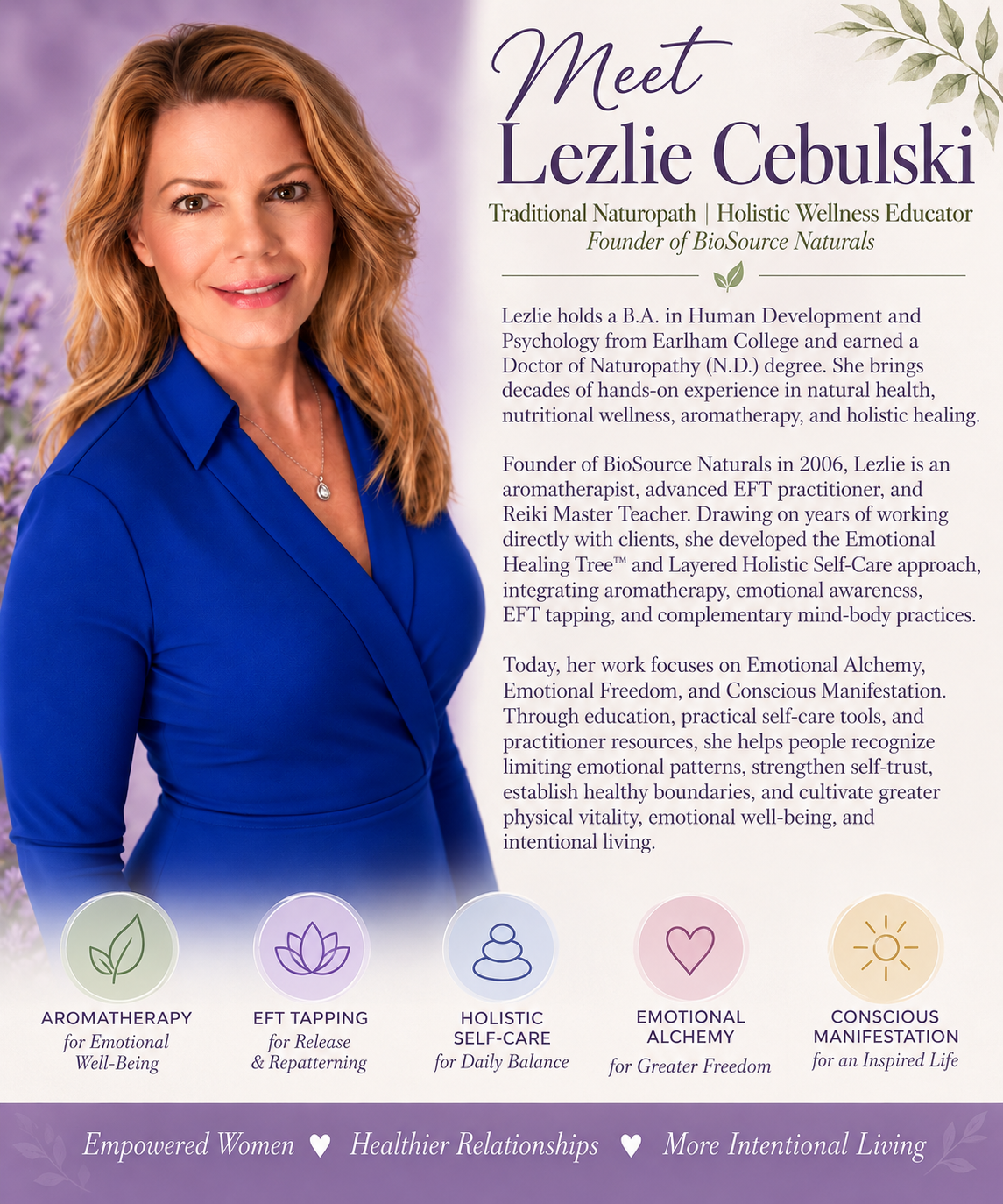
Lezlie Cebulski, N.D. (traditional naturopath) is a holistic wellness educator, naturopath, aromatherapist, Emotional Freedom Techniques (EFT-ADV) practitioner, Reiki Master Teacher, B.A. Psychology & Human Development with three decades of experience in natural health, wellness, and the science of essential oils.
As the founder of BioSource Naturals and Holistic Healing & Wellness, Lezlie combines her background in human development, psychology, natural health, and chemistry to explore the connections between physical health, emotional well-being, and the mind–body relationship.
Her signature Layered Holistic Self-Care approach integrates aromatherapy, nutritional support, emotional awareness, EFT, and other complementary practices to encourage greater emotional freedom, nervous system balance, and physical vitality.
Through her educational articles and wellness resources, Lezlie empowers individuals to better understand their bodies, explore evidence-informed natural approaches, and take an active role in their personal healing journeys.
Important note: This article is intended for educational purposes and does not diagnose or treat anxiety disorders or gastrointestinal conditions. Supplements and essential oils can cause adverse effects or interact with medications. Persistent anxiety, panic symptoms, significant digestive changes, unexplained weight loss, blood in the stool, or other concerning symptoms warrant professional evaluation. People who are pregnant, breastfeeding, immunocompromised, or managing chronic medical conditions should seek individualized guidance before using supplements or concentrated botanical preparations.