
Emotional Healing and Self-Discovery: The Journey Back to Being More Yourself
Our Blog
Emotional Healing and Self-Discovery: The Journey Back to Being More Yourself
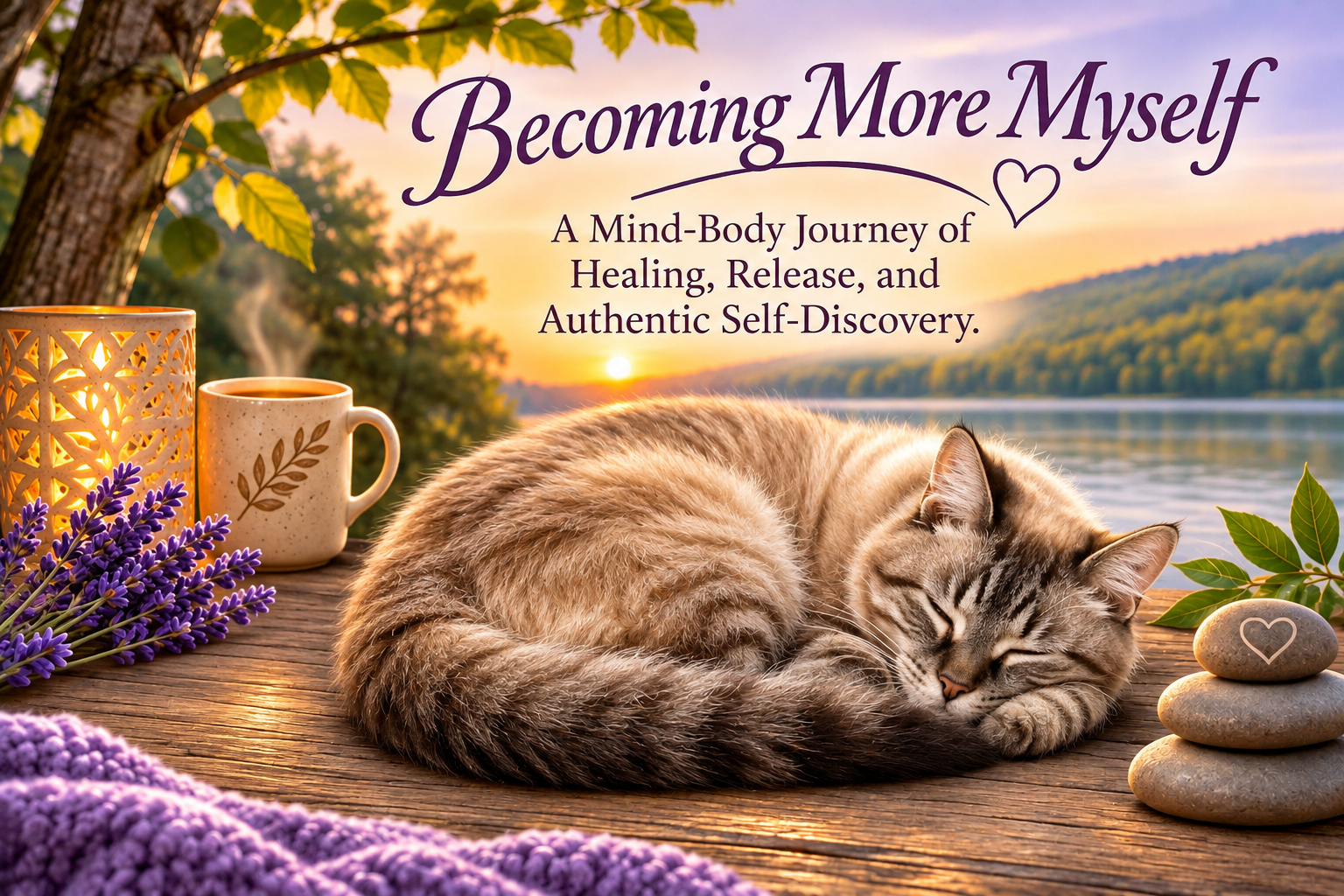
How Aromatherapy, EFT Tapping, Breathwork, and Mind-Body Care Can Help You Release Old Patterns and Rediscover Your Authentic Self
There comes a point in life when healing is no longer about fixing what is wrong with us. It becomes about rediscovering who we are beneath the expectations, responsibilities, emotional wounds, and survival patterns we’ve accumulated over the years.
I’ve come to think of this process as becoming more myself.
Not reinventing myself. Not striving to become someone better, stronger, or more accomplished. Simply allowing more of my authentic nature to emerge as I release what no longer belongs to me.
Over the past two years, I’ve experienced tremendous personal transformation. I’ve stepped away from long-held responsibilities, reconsidered old beliefs about obligation, and begun making more room for creativity, peace, freedom, and joy.
And I’ve discovered something important along the way:
Sometimes healing isn’t about adding something to our lives. It’s about releasing what has been keeping us from fully experiencing them.
How We Lose Touch With Ourselves
Most of us don’t consciously decide to abandon our authentic selves. It happens gradually.
We learn to accommodate other people’s expectations. We take on responsibilities because we’re capable. We suppress emotions to maintain relationships, avoid conflict, or keep everything functioning smoothly.
We become the dependable one. The problem solver. The caretaker. The person who holds everything together.
These roles can be meaningful and rewarding. But when they become obligations rather than conscious choices, we may gradually lose touch with our own needs, desires, and inner guidance.
Our bodies may begin reflecting the strain through muscle tension, fatigue, disrupted sleep, digestive discomfort, or a persistent sense of being overwhelmed.
We might recognize that something needs to change without fully understanding what it is.
And sometimes, the most important question isn’t What else do I need to do?
It’s What am I finally ready to stop carrying?
Emotional Healing and Self-Discovery Is Often a Process of Unlearning
Many emotional patterns were developed for good reasons.
Perhaps being helpful earned us love or approval. Perhaps avoiding conflict kept us safe. Perhaps achievement became a way of establishing our worth.
These adaptations may have served us well at one time.
But the strategies that helped us navigate earlier stages of life aren’t necessarily the ones that will support our well-being today.
Healing invites us to examine these patterns with compassion rather than judgment.
We can begin asking:
- Am I doing this because I genuinely want to, or because I feel obligated?
- Does this responsibility still belong to me?
- Am I responding to the present situation, or to an old emotional pattern?
- What would I choose if I weren’t afraid of disappointing someone?
- What brings me genuine satisfaction, peace, and joy?
The answers don’t always arrive immediately.
Sometimes they emerge gradually as we create enough emotional and physical space to hear ourselves again.
This is where mind-body practices can become valuable companions on the journey.
Aromatherapy: Creating Space for Emotional Awareness, Emotional Healing and Self-Discovery
Our sense of smell has particularly close connections with brain regions involved in emotion and memory.
An aroma can evoke a familiar feeling, remind us of a meaningful experience, or become associated with a sense of comfort and safety.
I have worked with essential oils for decades, and one of the things I appreciate most about aromatherapy is its ability to help us create intentional moments of self-awareness.
Rather than simply selecting an essential oil to make us feel better, we can use aromatherapy as an invitation to explore what we’re experiencing.
For example:
Lavender can become part of an evening relaxation ritual, encouraging us to release the day’s demands.
Frankincense may serve as a grounding aromatic companion during meditation, contemplation, or spiritual reflection.
Bergamot offers a bright, uplifting aroma that can complement moments of emotional renewal.
Rose can provide a beautiful sensory focus for practices involving self-compassion, tenderness, and emotional healing.
The essential oil isn’t doing our emotional work for us. Instead, the aroma can help establish an environment in which we feel more comfortable slowing down, noticing our emotions, and choosing how we wish to respond. Over time, familiar aromas can also become personal reminders of the emotional qualities we’re cultivating. We might begin associating a particular blend with freedom, self-acceptance, courage, or inner peace.
Research suggests that some aromatherapy practices may support relaxation and perceived well-being, although evidence varies by essential oil, application, and outcome.
EFT Tapping: Releasing the Emotional Patterns That Keep Us Stuck
Emotional Freedom Techniques (EFT), commonly called tapping, combines focused attention on emotional experiences with gentle tapping on specific points of the body.
One reason I appreciate EFT is that it gives us a structured opportunity to acknowledge emotions rather than suppress or intellectualize them. For example, someone who has spent decades being responsible for everyone else might consciously understand that they’re entitled to rest. Yet emotionally, resting may still produce guilt, anxiety, or a sense that they’re neglecting something important. This is where EFT can become a useful self-reflection practice.
We can begin by identifying the emotional conflict:
Even though part of me feels guilty when I’m not being productive, I’m open to accepting myself and recognizing that my worth is not determined by how much I accomplish.
As we tap, we can explore the beliefs underneath that discomfort:
- I have to be useful to be valued.
- I’m responsible for keeping everyone happy.
- If I stop doing everything, something will go wrong.
- Other people’s needs must come before my own.
- I don’t know who I am without these responsibilities.
Then we can gradually introduce more supportive possibilities:
- Maybe I can be loving without being responsible for everything.
- Maybe I can contribute without exhausting myself.
- Maybe I deserve to experience my own life, not just manage everyone else’s.
- Maybe becoming more myself means allowing some of these old expectations to fall away.
EFT doesn’t require us to force positive thinking or deny difficult emotions. It gives us a way to acknowledge what we’re experiencing while exploring new perspectives.
Some clinical research suggests EFT may help reduce anxiety and emotional distress, although the evidence remains developing and it is not a replacement for appropriate mental health care.
Breathwork: Learning That We Don’t Have to Live in Constant Readiness
When we’ve spent years responding to demands, deadlines, conflict, or other people’s needs, it can become difficult to recognize how much tension we’re carrying. We may unconsciously hold our breath, breathe shallowly, tighten our shoulders, or remain mentally prepared for the next problem. Even when our circumstances change, these habits can persist.
Gentle breathwork offers a simple way to interrupt that pattern. One practice I enjoy recommending involves allowing the exhalation to become slightly longer than the inhalation.
A Simple Breathing Practice for Letting Go
- Sit comfortably and relax your shoulders.
- Inhale gently through your nose for approximately four seconds.
- Exhale slowly and comfortably for approximately six seconds.
- Continue for two to five minutes without forcing or straining your breath.
- As you exhale, imagine releasing an expectation, responsibility, or emotional burden you’re ready to put down.
You might silently repeat:
- I don’t have to carry everything.
- I can allow myself to rest.
- I am safe to be myself.
Slow, comfortable breathing can support relaxation and help regulate the body’s stress response. And perhaps equally important, it gives us permission to stop doing and simply experience being.
If extended exhales feel uncomfortable, return to your natural breathing rhythm.
Body-Mind Lotions: Bringing Emotional Healing and Self-Discovery Into the Body
Emotional healing isn’t just about understanding our thoughts and feelings. Sometimes, incorporating touch, scent, and intentional self-care can help us feel more grounded, present, and connected to ourselves.
This philosophy inspired my creation of BioSource Naturals Body-Mind Lotions, a collection of specialized aromatherapy lotions that combine physical skin care with complementary emotional and energetic wellness practices.
Unlike conventional moisturizers, each fast-absorbing, plant-based formula incorporates seven elements of layered holistic self-care: pure essential oils, Bach flower essences, gemstone elixirs, color and light frequencies, sound frequencies, Reiki and intentional preparation, and a nourishing botanical lotion base.
Each blend is created around a particular emotional theme:
- Open Heart: Self-compassion, forgiveness, grief, and healing after disappointment or heartbreak.
- Courage & Clarity: Confidence, emotional resilience, healthy boundaries, and moving beyond fear.
- Purification: Letting go of resentment, anger, guilt, and outdated emotional patterns.
- Stress Relief: Relaxation, emotional overwhelm, and more compassionate communication.
The lotions can be applied during EFT tapping, breathwork, meditation, massage, journaling, or affirmations. Their aromas and the gentle sensation of applying lotion provide a sensory focus, helping transform a simple daily routine into a meaningful moment of reflection and self-care.
Each formula also incorporates traditional chakra and meridian associations, offering an optional energetic dimension for those who enjoy these practices. These energetic elements are rooted in complementary wellness traditions rather than scientifically established medical treatments.
The intention is not to make difficult emotions disappear, but to create a nurturing ritual in which we can acknowledge our feelings, explore old patterns, and consciously choose how we want to move forward.
Explore the Body-Mind Lotions, Their Ingredients, and How to Use Them
A Body-Mind Lotion Ritual for Becoming More Yourself
Step 1: Choose your intention.
Before applying your lotion, consider what emotional quality you’d like to cultivate.
Perhaps it’s self-acceptance, freedom, courage, forgiveness, or inner peace.
Step 2: Engage your senses.
If using a properly formulated aromatherapy lotion, take a moment to appreciate its aroma.
Notice the texture as you gently massage it into your hands, arms, shoulders, or feet.
Allow yourself to experience the physical sensation without rushing.
Step 3: Breathe and reconnect.
Take several slow, comfortable breaths.
Notice whether you’re holding tension anywhere in your body.
Rather than trying to force relaxation, simply acknowledge what you feel.
Step 4: Introduce an affirmation.
Choose a statement that feels meaningful and believable.
- I am allowed to become more myself.
- I release the need to meet everyone’s expectations.
- I can be loving without abandoning myself.
- My needs, preferences, and desires matter.
- I am creating a life that reflects who I truly am.
Step 5: Integrate EFT if desired.
If an uncomfortable emotion emerges, you can pause the lotion application and spend a few minutes tapping.
For example:
Even though I still feel responsible for things that no longer belong to me, I’m open to giving myself permission to let go.
Then return to your lotion ritual with renewed awareness.
The purpose isn’t to eliminate every uncomfortable feeling.
It’s to develop a more compassionate, attentive relationship with yourself.
The moisturizing lotion supports physical skin care, while the mindfulness, aromatherapy, and intentional touch create an opportunity for emotional self-care. The lotion itself should not be considered a treatment for psychological or medical conditions.
The Healing Power of Unconditional Love
Not all healing takes place through structured practices. Sometimes it happens quietly, through relationships in which we feel accepted without having to perform, achieve, or prove anything.
A beloved animal can offer a particularly beautiful example of this. Animals don’t care about our professional accomplishments, productivity, status, or how much we’ve managed to get done. They simply want to share our presence. Over the past two years, one of my beloved cats, Buster Brown, has been a constant companion through a period of profound personal change.
He arrived in my life just as one chapter was ending and another was beginning. Looking back, I believe his companionship helped create a sense of comfort and continuity while I was learning to live differently. He didn’t need me to be accomplished, productive, or responsible for everyone around me. He simply loved me. And in his own special way, he helped me heal and become more myself.
As I now prepare to say goodbye to him, I’m reminded that healing and grief are not opposites. We can feel tremendous sadness while also experiencing deep gratitude. We can recognize that a relationship has changed us, even when its physical presence is coming to an end.
And sometimes the love we receive during a period of transformation becomes part of the person we carry forward.
Becoming More Yourself Doesn’t Mean Becoming Selfish
For people who have spent much of their lives helping others, prioritizing personal needs can initially feel uncomfortable. We may confuse boundaries with rejection, rest with laziness, or independence with selfishness. But becoming more ourselves doesn’t require us to stop caring about other people. It means recognizing the difference between love and obligation, compassion and over-responsibility, generosity and self-abandonment.
We can continue contributing to the world without making ourselves responsible for everyone else’s outcomes. We can offer support without becoming consumed by another person’s problems. We can pursue meaningful work because it brings satisfaction rather than because we feel compelled to prove our worth. And we can create room for joy without feeling that we must first earn it.
This is an important distinction. The goal isn’t to become less loving. It’s to become more authentic in how we express that love.
Layered Holistic Self-Care: Supporting the Journey Back to Yourself
My approach to wellness emphasizes Layered Holistic Self-Care, the idea that different complementary practices can work together to support emotional awareness, physical relaxation and healing, and personal well-being.
Aromatherapy engages the senses and creates opportunities for emotional reflection. EFT tapping offers a structured practice for exploring uncomfortable feelings and longstanding beliefs. Breathwork encourages us to slow down and develop greater awareness of our stress responses. Body-Mind Lotion rituals bring these practices into everyday experiences of physical nurturing and mindful touch. Journaling, meditation, movement, and time in nature can offer additional opportunities for self-discovery.
None of these practices needs to become another obligation. In fact, that would defeat much of the purpose. The goal isn’t to create a longer list of things we should be doing. It’s to discover which practices genuinely support us, which ones we enjoy, and how they can fit naturally into our lives. Sometimes a meaningful self-care practice lasts thirty minutes. Sometimes it lasts thirty seconds.
And sometimes the most healing choice is simply to put everything down and rest.
You Don’t Have to Become Someone New
Perhaps one of the greatest gifts of growing older is the opportunity to reconsider who we’ve been taught we should be. We can recognize the value of everything we’ve experienced without allowing our past roles to define our future. We can appreciate the strengths that helped us survive difficult circumstances while releasing the patterns that no longer serve us. We can stop measuring our worth by how much we accomplish, how many people depend on us, or how successfully we meet other people’s expectations. And we can begin making choices from a different place.
Not fear.
Not guilt.
Not obligation.
But curiosity, love, freedom, and genuine desire.
Healing isn’t always about becoming a better version of yourself. Sometimes it’s about becoming less burdened, less conditioned, and less afraid to be who you’ve always been.
That’s what becoming more myself has meant to me.
And perhaps the most beautiful part of this journey is realizing that the person we’ve been searching for was never really lost.
She was simply waiting for enough space to emerge.
Click to Enlarge and Read
Begin Your Own Mind-Body Wellness Journey
If you’re seeking support for physical health concerns, emotional challenges, chronic stress, or simply want to experience greater balance and well-being, I would love to work with you.
As a Naturopath and Holistic Wellness Practitioner, I offer an individualized, integrative approach that considers the connections between physical health, emotional well-being, lifestyle, and the mind-body relationship. Depending on your individual needs, sessions may incorporate traditional naturopathic wellness guidance, nutritional and lifestyle support, customized aromatherapy, Emotional Freedom Techniques – Tapping, Breathwork, Reiki along with supportive detoxification and relaxation equipment such as an Infrared Sauna with Color therapy & a Red Light-PEMF-Infrared Crystal Mat.
My goal is to help you better understand your body’s needs, explore factors that may be contributing to your concerns, and develop practical, personalized strategies that support your overall wellness.
Sessions are available in person at my Michigan office or remotely through telehealth. Whether you’re navigating physical discomfort, emotional stress, a major life transition, or a combination of challenges, I invite you to contact me to explore how we might work together.
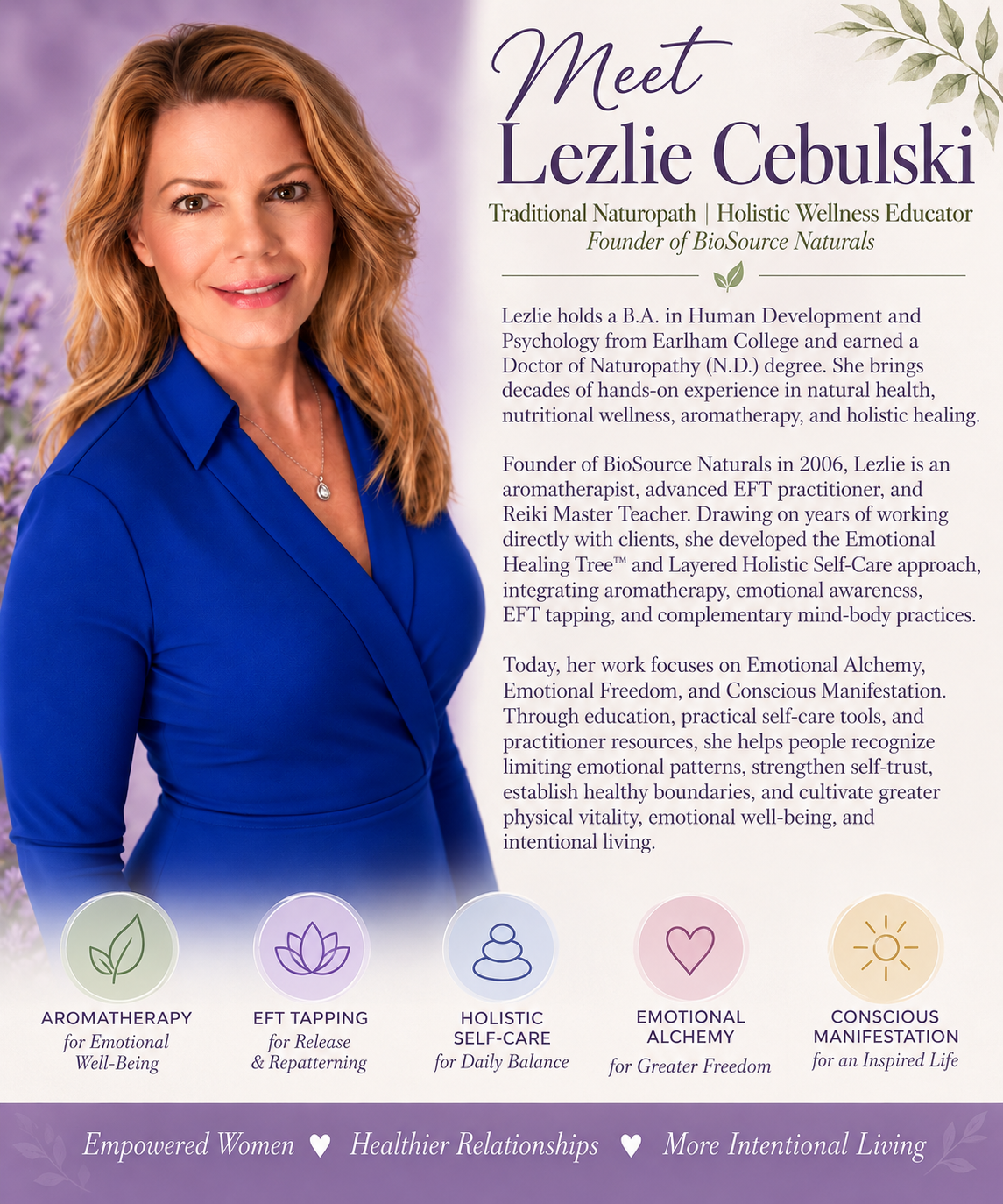
Lezlie Cebulski, N.D.
Holistic Wellness Practitioner | Aromatherapist | EFT-ADV | Reiki Master Teacher
Explore more about aromatherapy, EFT tapping, breathwork, and Layered Holistic Self-Care through BioSource Naturals and Holistic Healing & Wellness.
Wellness disclaimer: These practices are intended to support relaxation, self-awareness, and general well-being. They are complementary approaches and are not substitutes for medical or psychological diagnosis or treatment. Individual responses vary. Essential oils and scented skin-care products should be appropriately diluted and used with attention to sensitivities and contraindications.